










For the 49th consecutive year, the Ford F-Series is America’s best-selling truck, topping 800,000 sales in 2025 and extending a leadership streak unmatched in the U.S. auto industry. Ford executives say that milestone is less a victory lap than a reminder that dominance can disappear quickly if a brand stops treating market share as something earned rather than owned.
The company frames F-Series’ longevity as a direct result of staying close to customers, treating every model year as a new proving ground instead of a reward for past performance. Ford leaders argue that many “sure thing” products in American industry failed because companies grew complacent, while the F-Series has remained relevant by continually reinventing what a full-size pickup can be.
Customer Pain Points Shape The Trucks
Ford describes its product development philosophy for F-Series in simple terms: every major feature must solve a real customer problem, not just add showroom sizzle. Internal teams study how trucks are actually used on job sites, boat ramps, and in daily life, then look for moments of friction that engineering can remove.
Recent examples include Pro Power Onboard, which effectively turns the truck into a mobile generator so owners can power tools or support rescue operations without separate equipment. The company’s Pro Access Tailgate arrived after engineers watched customers struggle to reach cargo when towing, while Smart Towing Tech was designed to reduce the stress and guesswork of backing a trailer down a crowded ramp on a weekend morning.
F-150 Lobo: Performance Beyond the Worksite
Within the F-Series family, Ford sees the new F-150 Lobo as proof that capability now means more than just payload and towing charts. The truck targets a subculture of owners who view their vehicle as a performance canvas, pairing a lowered suspension and a 5.0L V8 with a street-focused stance that leans into style and speed rather than pure utility.
Ford designers say the Lobo grew from conversations with customers who love F-150 toughness but want a factory-built expression of urban and enthusiast truck culture. By embracing that niche from the outset, Ford aims to keep younger, performance-minded drivers inside the F-Series ecosystem instead of losing them to aftermarket conversions or rival brands.
Lightning EREV: Extending The Electric Promise
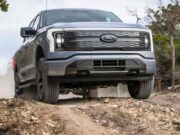
Electrification is another arena where Ford insists customer feedback is steering the next F-Series chapter. After launching the F-150 Lightning, the company gathered extensive real-world input, especially from owners who tow heavy loads and who found that range anxiety and charging logistics remained major barriers.
In response, Ford is developing the next-generation F-150 Lightning Extended Range Electric Vehicle (EREV), pairing the near-instant torque of an electric powertrain with a generator-backed system targeting an estimated range of more than 700 miles. The goal is to give truck buyers the quiet power and responsiveness of EV driving without forcing them to compromise on long-distance towing or remote work demands.
Looking Past The 50-Year Milestone
Ford notes that more than 34 million F-Series trucks have been sold since 1977, a figure that underscores the lineup’s impact on both the brand and the broader U.S. truck market. Yet leaders in Dearborn describe those numbers as “backward-looking,” arguing that year 48, 49 and potentially 50 should be seen as waypoints on a journey instead of endpoints.
That future-focused mindset is reflected in ongoing updates such as more powerful standard V8 engines and smarter commercial upfitting integration on the 2025 Super Duty, as well as the rise of the F-150 PowerBoost Hybrid, now billed as the best-selling hybrid truck in the country. Ford’s message is that F-Series leadership does not come from having arrived at a destination, but from refusing to stop evolving, with a pledge to keep listening, keep reinventing, and treat every new model year like it is year one.