


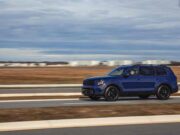


























Stellantis is rolling out a major reset of its North American business, anchored by a record U.S. investment, an aggressive new product cadence and a renewed focus on quality and regional decision‑making to reignite profitable growth.
Record Investment and Strategic Reset
Stellantis has approved the largest U.S. investment in its history: about 13 billion dollars over the next four years, aimed at driving growth and reinforcing its manufacturing footprint in the company’s key North American market. The spending supports new and refreshed vehicles, expanded powertrain choices and increased capacity utilization at American plants to align production more closely with customer demand.markets.
The company’s reset includes a deep review of its operations, followed by decisive actions to close “execution gaps” that had held back performance in recent years. Management frames this as a pivot from a period of underperformance to a renewed, customer‑centric growth phase built on disciplined capital allocation and sharper regional focus.
New Products, Powertrains and Jobs
As part of the reset, Stellantis is introducing five all‑new vehicles for the U.S. and initiating 19 additional product actions across its portfolio in a compressed time frame. These launches are paired with a plan to add more than 5,000 jobs and significantly increase utilization of U.S. manufacturing capacity, pointing to a tangible expansion of the company’s industrial base in America.markets.
On the product side, the group is rolling out 10 all‑new models in 2025 alone and broadening its powertrain menu, notably bringing back the HEMI nameplate alongside newer efficient combustion and electrified options. The strategy is designed to give U.S. shoppers more choice across gas, hybrid and electric drivetrains while keeping iconic performance branding in the mix for key nameplates.
Financial Impact and Extraordinary Charges
The restructuring and product pivot come with a substantial financial hit: Stellantis booked roughly 22.2 billion euros of charges in the second half of 2025 tied to the reset, excluding these amounts from its adjusted operating income metric. Around 6.5 billion euros of that total will be paid in cash over the next four years, reflecting costs such as capacity rationalization, warranty measures and supply‑chain repositioning.
Management argues that front‑loading these extraordinary items clears the way for cleaner, more profitable growth from 2026 onward, even as the scale of the charges has drawn scrutiny from investors and regulators. The company is positioning the reset as a one‑time shock designed to fund a long‑term transition toward a more competitive, electrification‑ready North American operation.
Early Signs of Volume and Quality Improvement
Stellantis reports that its turnaround steps are already yielding early benefits, with consolidated shipments in the second half of 2025 rising to 2.8 million units, up by 277,000 vehicles or 11 percent year‑over‑year. North America delivered the strongest contribution, with volumes surging 39 percent as both inventory management and retail sales improved, while Europe, South America, the Middle East & Africa, and China/India/Asia‑Pacific also posted gains.
Quality metrics show a similar positive trend, as issues reported in the first month of vehicle ownership fell by more than 50 percent in North America and over 30 percent in enlarged Europe compared with early 2025 levels. Stellantis attributes this to an expanded engineering workforce focused on quality management and revamped internal methods meant to tighten feedback loops from dealers and customers.
Empowered Regions and Electrification Roadmap
A key pillar of the reset is organizational: Stellantis is re‑empowering its regional teams, giving North American leaders more authority to tailor products, pricing and marketing to local tastes and competitive dynamics. This shift is intended to speed decisions on everything from trim mix to incentive strategy, reducing the lag between market signals and corporate responses.
At the same time, the automaker is reshaping its supply chain to better support forthcoming electrified vehicles, including next‑generation Ram pickups and other EVs and hybrids slated for U.S. launch. By aligning sourcing, battery capacity and plant tooling with its updated product roadmap, Stellantis aims to compete more effectively in a U.S. market that is simultaneously demanding capable trucks and SUVs and stricter efficiency and emissions performance.finance.