
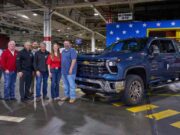

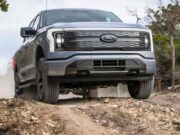















Ford has confirmed that, in its current form, the F-150 Lightning – the brand’s fully electric pickup – is being discontinued after falling well short of sales expectations in recent years. The conventional F-150 remains one of the best-selling vehicles in the United States, but the all-electric Lightning has turned out to be one of the slowest-moving models in Ford’s lineup.
The initial buzz around electric pickups in the U.S. has cooled noticeably, and based on sales figures and customer feedback, Ford concluded it needs to rethink its strategy. The company is not killing off the Lightning nameplate altogether, but the original all-electric concept will fundamentally change with the next generation.
Ford F-150 Lightning: From fully electric to range-extended
The next Ford F-150 Lightning will no longer be a pure battery electric vehicle in the traditional sense; instead, it will use an EREV drivetrain – a range-extended electric setup. In practice, that means the wheels will still be driven by electric motors, and a high-voltage battery will remain on board, but the system will be supplemented by an internal combustion engine.
That gasoline engine will not be mechanically connected to the driven axles; it will serve solely as a generator, producing electricity for the battery and the electric motors. With this approach, Ford aims to combine the instant response and smooth power delivery of an EV with the long-distance security of liquid fuel – something many pickup buyers still consider essential.
Huge driving range, EV-style performance
According to the original figures, the current fully electric Ford F-150 Lightning can cover roughly 320 miles (around 515 kilometers) on a charge under ideal conditions. With the new range-extended setup, however, the pickup could travel up to about 750 miles (around 1,200 kilometers) between charging and refueling stops, dramatically reducing range anxiety.
Crucially, Ford says the model will retain the lively, “electric” driving feel that existing Lightning owners appreciate, including strong instant torque and brisk acceleration. The automaker expects that the combination of a much longer range and more flexible day-to-day usability will make the truck more appealing to buyers who have been hesitant to commit to a fully electric pickup.
Ford isn’t the only one changing course
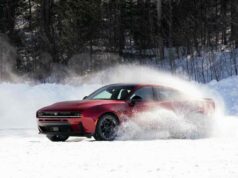
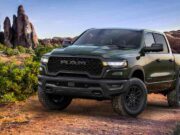
Ford’s move is far from unique: several major U.S. players are pivoting in a similar direction in the pickup segment. The revised F-150 Lightning will go up directly against the RAM 1500 REV, which is also expected to blend electric drive with range-extending technology.
At the same time, Scout – operating as Volkswagen’s American sub-brand – is preparing to launch its own range-extended pickup, the Terra, using a gasoline engine as an onboard generator as well. The trend clearly shows that the industry increasingly sees these “bridge” technologies as a compromise between fully electric vehicles and traditional internal combustion models.
Europe left out – for now
Large, American-style pickups have never been a major part of the European market, and that does not appear likely to change in the near future. It is considered almost certain that neither the reworked F-150 Lightning nor the RAM 1500 REV will be officially sold at European dealerships.
The situation is less clear in the case of the Scout Terra, since the brand’s longer-term European plans could still hold a few surprises. For the time being, though, it looks like the revolution in range-extended electric pickups will mainly reshape the daily lives of American truck buyers, while Europe continues its electric transition in very different market segments.