
























GM Motorsports currently competes across an unusually wide range of top-tier series, including NASCAR, IndyCar, IMSA, NHRA, off-road events such as Best in the Desert, international GT3 racing with Corvette, and Supercars in Australia and New Zealand. Cadillac already operates at the highest level of prototype sports car racing in both the IMSA WeatherTech Sportscar Championship and the FIA World Endurance Championship, including the 24 Hours of Le Mans.
A training ground for F1 talent
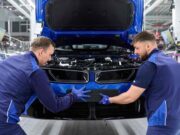
This broad portfolio has created an internal ecosystem where engineers, designers, technicians, and software specialists gain hands-on experience with propulsion, aerodynamics, simulation, tires, cooling, brakes, suspension, and electronics under race conditions. GM leaders say this environment lets young motorsports engineers accumulate experience at a speed and level they consider unmatched in the industry.
Winning as a core mindset
GM executives emphasize that winning is not just a slogan but a core element of Motorsports culture, backed by recent results. In the 2025 season alone, GM entries claimed championships in both NASCAR Cup and Xfinity, IMSA GTD Pro, Supercars, European Le Mans, Best in the Desert, and NHRA, totaling 114 race victories and more than 17 titles worldwide.
Production tech feeding race cars
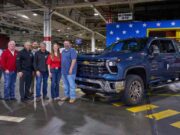
More than a century of high-performance vehicle development underpins GM’s current race efforts, with cars such as the Chevrolet Corvette and the Cadillac CT4-V and CT5-V Blackwing serving as rolling testbeds. Lessons in aerodynamics, powertrain performance, braking, and chassis behavior migrate between road and race programs, supported by engineers and aerodynamicists who work across both sides in a continuous “technology transfer in motion.”news.gm
Simulation as a competitive weapon
GM has invested heavily in virtual development tools used on major production programs, including the GMC Hummer EV, which was developed in roughly half the usual time by leaning on simulation. That expertise is critical in Formula 1, where strict testing limits make highly accurate, well-correlated simulation essential to refining a car before it reaches the track.
The challenge of tire modeling
Engineers at GM highlight tire modeling as one of the most complex problems in performance simulation, even for those with aerospace backgrounds. Because both road cars and race cars depend on the tire for every aspect of performance—acceleration, braking, and cornering—the ability to replicate tire behavior accurately in simulators is seen as a key differentiator.
Looking ahead to 2026
When the Cadillac Formula 1 Team lines up at the Australian Grand Prix in March 2026, it is set to become the first new F1 team in a decade and the first grand prix car developed by an American automaker. GM executives frame the effort as the culmination of hard-won experience, a deeply ingrained winning mentality, and a mature technical infrastructure they believe will be invaluable in the sport’s most demanding arena.