





























With the spring driving season just getting underway, American drivers are already feeling a familiar sting at the pump. The national average price for regular gasoline has climbed well above 3 dollars a gallon again, and the short‑term trajectory is pointed upward, even as long‑term forecasts paint a more moderate picture.
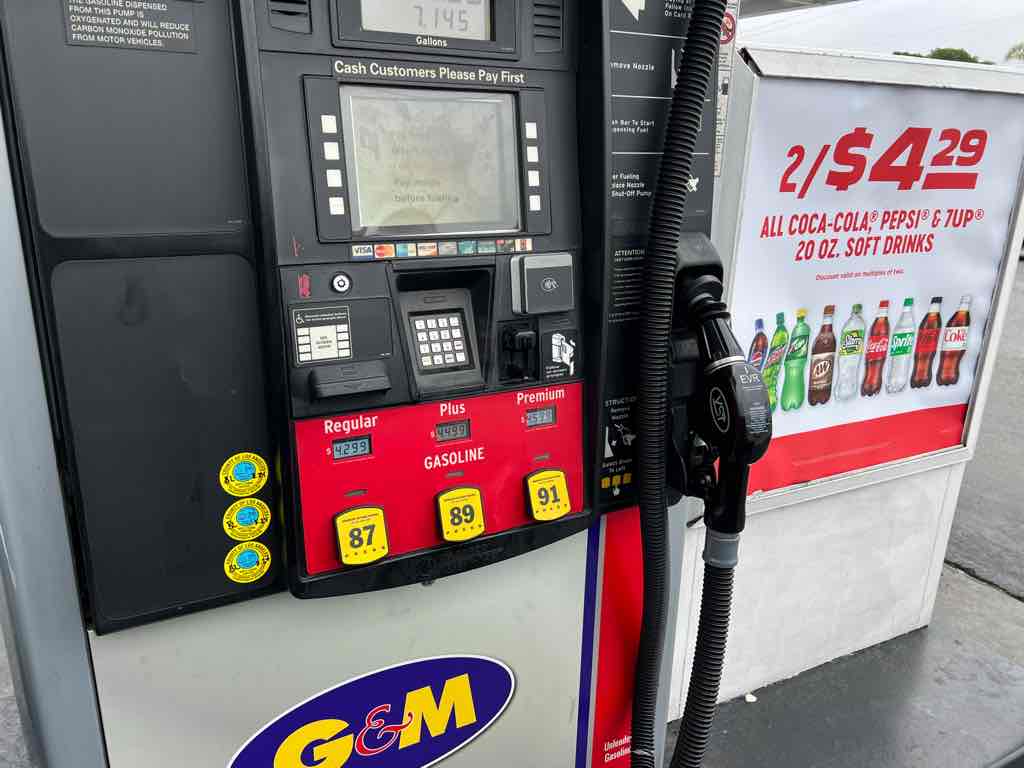
National Picture: Every State Above $3, Averages Near $3.50–$3.60
For the first time since 2023, every single US state is now averaging more than 3 dollars per gallon for regular unleaded. The national average has recently been hovering in the mid‑$3.50s per gallon range, with some daily readings brushing up against $3.60. That’s a jump of more than 30 cents in roughly a week and around 20–25 percent higher than prices seen earlier this year.
The spike is broad‑based, but not uniform. States in the middle of the country and parts of the South still sit toward the lower end of the spectrum, while coastal states – especially on the West Coast and in the Northeast – are well above the national average. The current situation is a classic snapshot of how global tensions, seasonal patterns and regional policy differences all converge in the price on the roadside sign.
Regional Gaps: California and Hawaii vs. the Middle of the Map
Regionally, the map of US gas prices looks familiar but more intense. California remains the most expensive major market, with average regular prices comfortably north of $5.40 a gallon in metro areas like Los Angeles. Hawaii is not far behind, with Honolulu in the high‑$4 to low‑$5 range, reflecting both logistical costs and local tax structures. Washington and other West Coast states are also in the high‑$4 territory.
By contrast, parts of the Midwest and South are still in the low‑to‑mid‑$3s, even after recent increases. States like Arkansas, Kansas or Oklahoma remain among the cheapest places to fill up, though even there the sub‑$3 era has now officially ended. On the East Coast, New York, Massachusetts and other Northeastern states cluster around the national average or slightly above it, typically in the $3.50–$3.80 range, depending on local taxes and distribution costs.
What’s Driving the Increase Right Now?
Several overlapping factors explain why prices are moving up so quickly in March 2026:
- Geopolitical tension and crude supply risk. Escalating conflict involving Iran has raised concerns about the security of oil flows through the Strait of Hormuz, a chokepoint through which roughly a fifth of the world’s oil and LNG supply passes. Even the threatof disruption is enough to push crude prices sharply higher in futures markets.
- Seasonal demand and fuel blend changes. Spring break travel and the ramp‑up to the summer driving season naturally increase gasoline demand. At the same time, refiners are preparing to switch from cheaper winter blends to more expensive, environmentally stricter summer gasoline in many regions, a transition that typically nudges prices upward.
- Refining capacity constraints. Several refineries have shut down or converted to alternative fuels in recent years, particularly on the West Coast and in parts of the Gulf. That leaves less spare capacity to absorb sudden swings in demand or crude costs, amplifying price spikes when they occur.
The combination of these forces has pushed daily price gains into territory not seen since the aftermath of major hurricanes and supply shocks, with some analysts warning that, if crude continues to rise, the national average could challenge or even surpass previous records.
Households and Businesses: Real‑World Impact of $3.50+ Gas
For an individual commuter with a typical 14‑ to 16‑gallon tank, filling up now often means a $50–$60 transaction, depending on where they live. For households with multiple vehicles, or for those driving larger SUVs and trucks, weekly fuel bills can quickly climb into the hundreds of dollars. That acts like a stealth tax on disposable income, forcing many families to rethink discretionary spending and travel plans.
Businesses are just as exposed. Independent truckers, delivery services, small construction firms and gig‑economy drivers see their operating costs rise almost immediately when pump prices jump. Although some of these costs can be passed on through fuel surcharges or higher service prices, there is usually a lag, during which margins are squeezed. In sectors where competition is fierce, companies may simply absorb more of the increase rather than risk losing customers.
Short‑Term Risk vs. Long‑Term Forecasts
Short‑term sentiment in financial and prediction markets has clearly turned cautious. Some betting markets have put notably high odds on the national average reaching $4.50 or even $5 per gallon by the end of March if tensions worsen and crude continues to spike. That would take the US back toward the record levels seen in 2022, when the average briefly topped $5.
However, official medium‑term projections are more reassuring. The US Energy Information Administration (EIA), in its latest outlook, expects average gasoline prices over the full year 2026 to be lower than in 2025, with a projected annual average just under $3 per gallon. The logic is that, after the current geopolitical turbulence and speculative spikes, underlying crude prices should ease, even if tight refinery margins and lower inventories keep some upward pressure on retail prices in certain regions.
In other words, while the pump price in March 2026 looks ugly, the baseline scenario from energy forecasters still assumes that this is a peak rather than a new normal.
What Drivers Can Actually Do
Individual motorists cannot change global oil markets, but there are a few practical steps that can ease the pain in the coming months:
- Combining trips and planning routes more efficiently to reduce total miles driven.
- Keeping tires properly inflated and vehicles well maintained to avoid wasting fuel.
- Using price‑tracking apps to seek out cheaper stations within a reasonable detour.
- Considering carpooling, public transit or telework where those options are realistic.
For many Americans, though, especially outside major metro areas, driving remains non‑negotiable. For them, the real question is not whether gas is $3.50 or $3.80 in March, but whether energy markets – and policymakers – can deliver a more stable, predictable cost structure over the next few years. As of now, the data suggests that today’s spike should moderate over time, but the ride between here and there is likely to remain bumpy.