










BMW delivered a standout performance in the United States during the second quarter of 2026, recording double-digit sales growth and outperforming the broader U.S. automotive market. Strong demand, improved vehicle availability, and continued momentum across the brand’s passenger car and Sports Activity Vehicle lineups helped BMW gain market share during the quarter.
BMW Sold More Than 102,000 Vehicles in Q2
BMW of North America reported sales of 102,713 BMW vehicles in the United States during the second quarter of 2026. That represented a 13 percent increase compared with the 90,884 vehicles sold during the same period in 2025.
The result gave BMW one of its strongest quarters in the U.S. market and allowed the company to outperform the automotive industry as a whole.
Through the first six months of 2026, BMW sold 186,944 vehicles in the United States, up 4.7 percent from 178,499 vehicles during the first half of 2025.
The company noted that the year-to-date result exceeded the record-setting performance achieved during the same period one year earlier.
Passenger Cars and SUVs Both Posted Strong Gains
BMW’s second-quarter growth was broadly distributed across its model lineup.
Passenger car sales reached 47,629 units, an increase of 12.8 percent compared with the second quarter of 2025.
BMW light-truck sales, which include the brand’s popular Sports Activity Vehicles, climbed 13.2 percent to 55,084 units.
The SUV side of the business also remained the stronger performer during the first half of the year. BMW sold 103,257 light trucks through June, representing an 11.4 percent increase from the same period in 2025.
Passenger car sales totaled 83,687 units during the first half, down 2.5 percent year over year. Despite that decline, the strong second-quarter rebound demonstrated renewed demand for BMW sedans, coupes, and other traditional passenger models.
BMW Outperformed the Overall U.S. Auto Market
BMW attributed its second-quarter performance to several factors, including strong customer demand, an effective product mix, improved vehicle availability, and the strength of its nationwide retail network.
The automaker said it gained share in both the premium segment and the overall U.S. new-vehicle market.
BMW of North America President and CEO Sebastian Mackensen said the quarterly results demonstrated continued customer confidence in the brand and validated the company’s long-term strategy for the American market.
The company’s ability to offer gasoline-powered, plug-in hybrid, and fully electric vehicles has become an increasingly important part of that strategy.
Rather than relying on a single form of propulsion, BMW continues to emphasize what it calls technology openness, allowing customers to select the powertrain that best fits their needs.
Plug-In Hybrid Sales Increased Nearly 23 Percent
Plug-in hybrid electric vehicles delivered one of the strongest performances within BMW’s electrified lineup.
Sales of BMW plug-in hybrids increased 22.9 percent during the second quarter and remained 6.4 percent higher for the first six months of the year.
Total electrified vehicle sales, which include both battery-electric and plug-in hybrid models, declined 18.1 percent during the quarter.
However, BMW reported signs of improvement as the quarter progressed, pointing to renewed customer interest and more favorable market conditions.
The company expects additional momentum from upcoming electric models, including the new BMW iX3 and the BMW i7.
The All-New BMW X5 Is on the Way
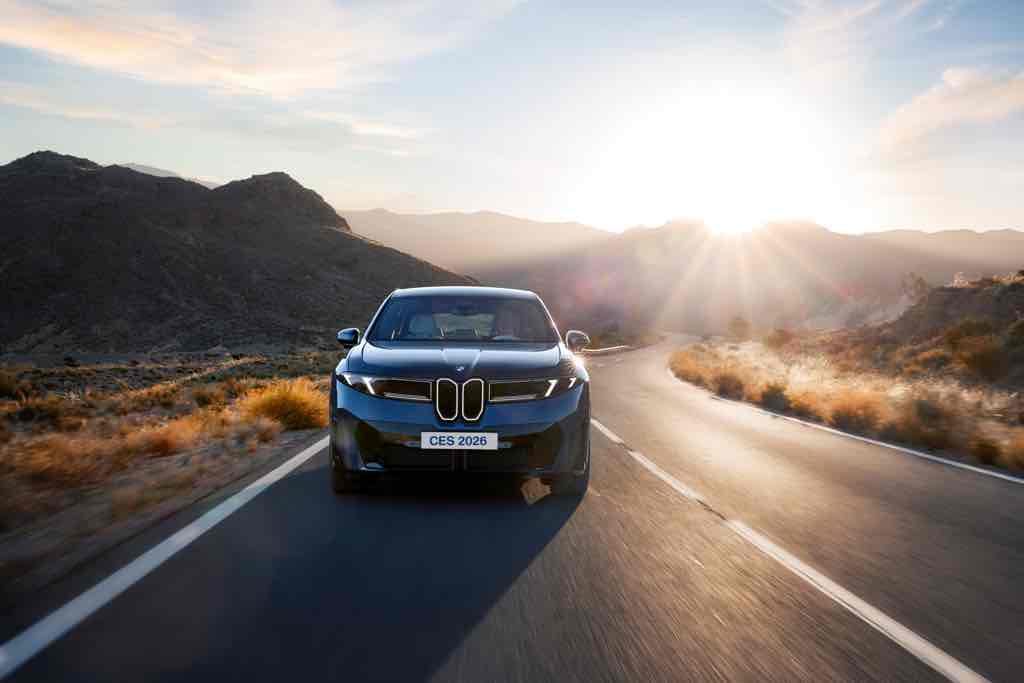
BMW also used the sales announcement to highlight one of its most important upcoming vehicles: the all-new BMW X5.
The next-generation X5 is expected to begin arriving later in 2026 and will be offered with a choice of internal-combustion, plug-in hybrid, and fully electric powertrains.
The model will introduce Neue Klasse design and technology into one of BMW’s best-selling nameplates.
Offering the X5 with multiple powertrain options reflects BMW’s broader approach to the transition toward electrification. The company continues to invest heavily in electric vehicles while maintaining gasoline and hybrid alternatives for customers who are not yet ready to switch to a fully electric model.
The X5 is especially important to BMW’s American operations because the model is closely tied to the company’s manufacturing presence in South Carolina.
MINI Sales Declined During the Quarter
While BMW posted substantial growth, MINI recorded a more challenging second quarter.
MINI sold 7,456 vehicles in the United States during the quarter, a decrease of 2.1 percent compared with the same period in 2025.
Through the first six months of the year, MINI sales totaled 13,717 units, down 6 percent from 14,592 vehicles during the first half of 2025.
The decline came as MINI continued to introduce its latest generation of vehicles and expand its electrified product lineup in the American market.
BMW’s U.S. Operations Remain a Major Part of the Business
BMW Group has operated in the United States for more than 50 years and maintains a major sales, manufacturing, financial services, design, and technology presence across the country.
Its U.S. operations include approximately 30 locations in 12 states.
BMW Manufacturing in South Carolina is the company’s largest individual production facility worldwide and serves as the global center of competence for BMW Sports Activity Vehicles.
The company’s American retail network includes 359 BMW retailers, 104 MINI dealers, 139 BMW motorcycle retailers, and 38 Rolls-Royce dealerships.
BMW Group estimates that its activities in the United States support more than 120,000 jobs and contribute more than $43 billion annually to the U.S. economy.
A Strong Foundation for the Rest of 2026
BMW enters the second half of 2026 with strong sales momentum, improving inventory availability, and several major product launches on the horizon.
The upcoming X5, iX3, and i7 are expected to strengthen the company’s position across gasoline, hybrid, and electric vehicle segments.
If demand remains strong, BMW could be positioned for another record year in the United States while continuing to gain ground in both the luxury market and the broader automotive industry.