












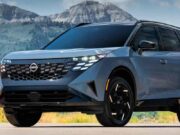











The all-new 2027 Nissan Rogue Hybrid represents a major step forward for one of America’s most popular compact SUVs. Combining Nissan’s advanced e-POWER hybrid technology with an exceptionally quiet cabin, innovative Smooth Stop braking and the latest generation of ProPILOT Assist, the redesigned Rogue Hybrid promises a more comfortable, intuitive and sophisticated driving experience. With standard electric all-wheel drive, impressive fuel efficiency and premium technology throughout the cabin, Nissan is positioning its newest hybrid as the most refined Rogue ever produced.
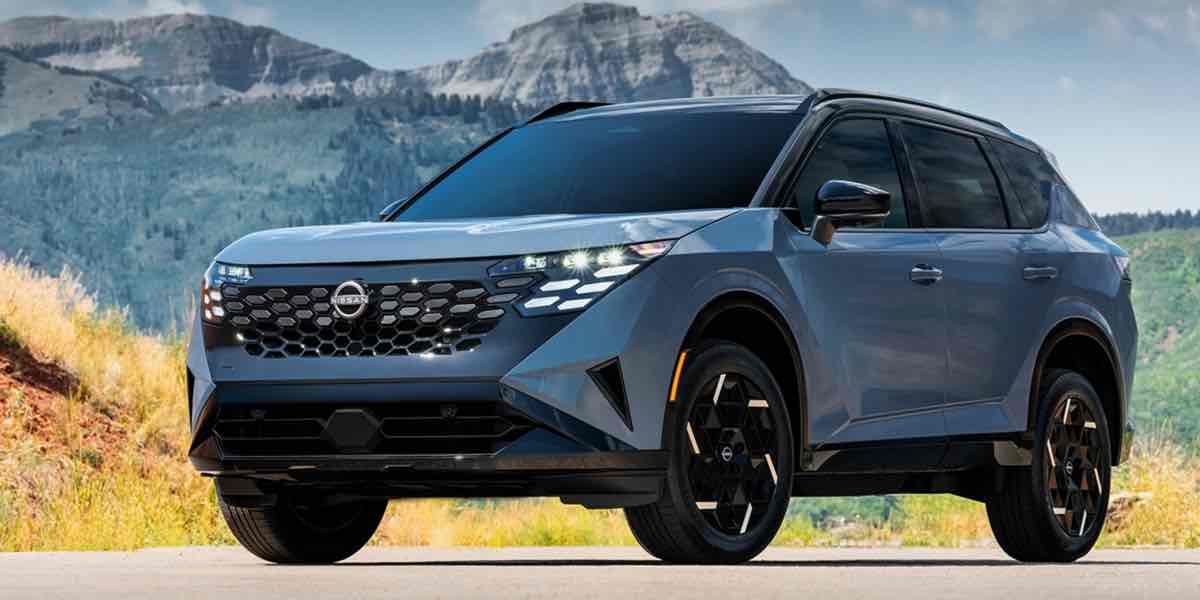
A New Chapter for Nissan’s Best-Selling SUV
The compact crossover segment remains one of the most competitive areas of the American automotive market. Buyers expect exceptional fuel economy, advanced driver-assistance systems, generous interior space and everyday practicality, all without sacrificing comfort or affordability.
With the introduction of the 2027 Nissan Rogue Hybrid, Nissan aims to deliver considerably more than a conventional hybrid powertrain.
The new model introduces the automaker’s latest-generation e-POWER technology to the United States, combining electric-motor propulsion with the convenience of gasoline refueling.
Unlike traditional hybrids that can use both an internal combustion engine and an electric motor to drive the wheels, Nissan’s e-POWER system relies exclusively on electric motors for propulsion. The gasoline engine operates as a generator, producing electricity for the battery and electric drivetrain.
The result is a driving experience designed to feel closer to a fully electric vehicle, without requiring external charging.
However, Nissan engineers believe that the Rogue Hybrid’s greatest strengths extend beyond its powertrain.
Three particularly important developments distinguish the 2027 model: dramatically improved cabin quietness, smoother braking behavior and a more sophisticated generation of intelligent driver-assistance technology.
1. An Exceptionally Quiet Cabin Designed Around Passenger Comfort
One of Nissan’s primary development objectives was creating a cabin that remains remarkably quiet across a broad range of driving conditions.
Whether traveling through urban streets or cruising on the interstate, the 2027 Rogue Hybrid has been engineered to minimize unwanted noise and vibration.
Derek Johnson, a research and development engineer at Nissan Technical Center North America in Farmington Hills, Michigan, explained that interior refinement was a central priority throughout development.
The engineering team concentrated on reducing road noise, wind turbulence and mechanical sounds that can become particularly noticeable during longer journeys.
Strategic Sound Insulation Reduces Road Noise
Nissan installed carefully positioned sound-absorbing materials throughout areas especially vulnerable to noise intrusion.
The wheel wells received particular attention because tire noise transmitted through the vehicle structure can significantly influence perceived cabin refinement.
Rather than relying exclusively on additional insulation, engineers also optimized the exterior design to reduce aerodynamic turbulence.
Several seemingly minor details contribute to the quieter driving experience.
The new Rogue Hybrid incorporates concealed windshield wipers, door-mounted exterior mirrors and slim roof rails designed to minimize wind disturbance.
Individually, these improvements may appear relatively modest. Together, they help create a more peaceful environment for passengers.
Even the available ventilated front seats received special attention.
Nissan developed a revised ventilation design intended to reduce the operational noise associated with the cooling system.
It is an interesting example of how the company approached refinement as a complete vehicle-development objective rather than simply adding more sound insulation.
Zero Gravity Seating and Generous Interior Space
Noise reduction is only part of the comfort equation.
The 2027 Rogue Hybrid also features Nissan’s familiar Zero Gravity seats, designed to support occupants during extended periods behind the wheel.
Soft-touch materials and a spacious interior contribute to an atmosphere that Nissan wants to position above typical expectations for the segment.
According to the automaker’s competitive comparisons, the Rogue Hybrid offers more front headroom than any hybrid in its class.
The vehicle also delivers class-leading front legroom among comparable hybrid models.
These characteristics should make the new Rogue particularly appealing to drivers who regularly cover substantial distances or families who prioritize passenger comfort.
Combined with the unusually quiet cabin, the improvements suggest that Nissan has focused heavily on making everyday driving less tiring.
2. Smooth Stop Technology Brings Chauffeur-Like Braking Refinement
Perhaps one of the most interesting innovations introduced with the 2027 Rogue Hybrid is Nissan’s new Smooth Stop technology.
Its purpose is surprisingly straightforward: make the final moments of braking feel more natural and comfortable.
Experienced professional chauffeurs often use a technique commonly described as a limousine stop.
Rather than maintaining constant braking pressure until a vehicle comes to a complete halt, the driver gently eases pressure near the end of the maneuver.
This reduces the subtle forward-and-backward movement passengers frequently experience when a vehicle stops.
Nissan has effectively automated this process.
How Nissan Smooth Stop Works
The Smooth Stop system automatically adjusts braking pressure as the Rogue Hybrid approaches a complete stop.
Drivers simply apply and maintain pressure on the brake pedal.
The technology handles the final modulation, helping the vehicle settle more gently without requiring the driver to perform the technique manually.
The difference may be particularly noticeable during everyday commuting, when repeated stops can make even relatively short journeys uncomfortable.
Traffic lights, congested intersections and stop-and-go highway conditions provide ideal opportunities for the system to demonstrate its benefits.
According to Nissan, Smooth Stop is a first-in-class feature, based on the company’s defined competitive segment.
While it may not attract the same attention as large infotainment displays or powerful electric motors, the technology addresses one of the more subtle aspects of driving refinement.
e-Pedal Makes Stop-and-Go Driving Easier
Smooth Stop is complemented by another distinctive Nissan technology: e-Pedal.
The 2027 Rogue Hybrid features a class-exclusive implementation of the system, allowing drivers to manage acceleration and deceleration primarily through the accelerator pedal.
Pressing the pedal increases vehicle speed, while releasing it initiates controlled deceleration.
In appropriate driving conditions, the system can bring the vehicle to a stop without requiring the driver to transfer their foot to the brake pedal.
This functionality can be especially convenient in heavy traffic.
Drivers can progressively regulate vehicle speed using a single pedal, reducing the repeated physical movements normally associated with conventional braking.
Together, e-Pedal and Smooth Stop create a more relaxed driving experience, particularly in urban environments where frequent acceleration and deceleration are unavoidable.
The systems also complement the smooth torque delivery associated with Nissan’s electric-drive hybrid architecture.
3. A More Intelligent ProPILOT Assist System
The third major area of improvement involves Nissan’s latest generation of ProPILOT Assist.
Every 2027 Rogue Hybrid includes an updated version of the company’s driver-assistance technology, which combines steering assistance with adaptive speed and following-distance control.
The objective is to make driving assistance feel smoother, more predictable and more natural.
Nissan engineers spent extensive time testing the system under real-world conditions.
California provided particularly valuable development environments, including heavily congested highways, winding mountain roads and a wide variety of challenging traffic situations.
These conditions allowed engineers to improve the software’s ability to respond to surrounding vehicles and changing road geometry.
Improved Camera Technology Provides Earlier Detection
One of the most important hardware improvements is the revised forward-facing camera.
Compared with the previous system, the new camera provides a 20% wider field of view.
This enhanced visual coverage contributes to object detection at distances up to 33% farther than before.
Nissan states that these improvements can allow the system to respond up to two seconds earlier when traveling at 70 mph.
That additional detection capability helps ProPILOT Assist anticipate traffic conditions rather than relying on more abrupt adjustments.
The engineering team also refined steering and acceleration behavior.
According to Nissan, the system now accelerates and decelerates more smoothly while maintaining a more consistent position within the driving lane.
Its operating capabilities have also been expanded to accommodate a wider variety of road configurations, including unusually wide lanes.
These improvements are particularly relevant for American drivers who regularly encounter long interstate journeys, unpredictable traffic patterns and extended commuting periods.
ProPILOT Assist remains a driver-assistance system, not a replacement for attentive driving.
The driver must continue monitoring road conditions and remain prepared to take control whenever necessary.
Hands-Off Traffic Jam Support Takes Convenience Further
Beyond the standard ProPILOT Assist system, Nissan offers an upgraded configuration with Hands-Off Traffic Jam Support.
The technology is available on the Rogue Hybrid SR and included as standard equipment on the Platinum trim.
Under appropriate operating conditions, the system enables hands-off steering assistance in traffic at speeds below 30 mph.
When activated, it can help manage steering, acceleration and braking while following surrounding traffic.
This functionality is intended to reduce driver workload during extended periods of congestion.
The driver must still supervise the system and remain attentive to road conditions.
Automatic Lane Changes at Highway Speeds
The upgraded ProPILOT Assist system also introduces automatic lane-change assistance.
At highway speeds, drivers can request a lane change by briefly operating the turn signal.
The vehicle then monitors surrounding traffic and, when conditions allow, initiates the maneuver.
The driver’s hands must remain on the steering wheel during these higher-speed lane changes.
For long-distance commuters and frequent highway travelers, the functionality could make passing slower traffic more convenient.
Nissan has also redesigned the digital instrument-cluster graphics to make driver-assistance information easier to interpret.
When ProPILOT Assist is operating, the display can show nearby vehicles and identify the vehicle being followed.
The improved visualization helps communicate what the assistance system is detecting and how it is responding.
This emphasis on clarity reflects Nissan’s broader goal of introducing advanced technology without making the driving experience unnecessarily complicated.
Advanced Displays and Everyday Connectivity
Technology plays a significant role throughout the new Rogue Hybrid’s cabin.
The vehicle offers available dual 14.3-inch digital displays, creating a modern dashboard environment that combines instrumentation and infotainment functions.
Apple CarPlay and Android Auto are standard, providing familiar smartphone integration.
Another notable feature is the standard Qi2 wireless charging system, which Nissan describes as a class-exclusive offering.
The technology is designed to provide more convenient wireless smartphone charging while maintaining compatibility with supported devices.
Available Google built-in functionality also brings integrated digital services directly into the vehicle.
On appropriately equipped models, this includes Google Maps and Google Gemini integration.
Importantly, Nissan has retained conventional physical controls for frequently used functions.
Climate temperature, fan speed and airflow direction can still be adjusted without navigating multiple touchscreen menus.
The same practical philosophy extends to heated-seat controls and other regularly accessed functions.
It is a welcome approach at a time when many manufacturers are transferring an increasing number of basic vehicle operations to central touchscreens.
Nissan e-POWER Delivers an Electric Driving Experience Without Plugging In
Although the latest comfort and assistance technologies are central to the Rogue Hybrid’s identity, its powertrain remains equally important.
The 2027 model introduces Nissan’s latest e-POWER hybrid system to the American market.
Unlike a plug-in hybrid, the Rogue Hybrid does not require connection to a charging station.
Instead, its gasoline engine generates electricity that supplies the battery and powers the electric-drive system.
The wheels are driven exclusively by electric motors.
This configuration eliminates the conventional relationship between engine speed and wheel speed found in many gasoline-powered vehicles.
It also removes the need for a traditional transmission to shift between gears.
As a result, acceleration can feel more immediate and consistent, with torque delivered directly through the electric drivetrain.
The Rogue Hybrid features standard dual-motor all-wheel drive, providing additional traction and more sophisticated torque distribution.
Nissan has already developed e-POWER technology over three generations, with nearly two million equipped vehicles sold worldwide since 2016.
For the American Rogue Hybrid, the system has been specifically calibrated for North American driving conditions, including typical highway speeds, road surfaces and customer expectations.
Strong Fuel Economy for an All-Wheel-Drive SUV
Fuel efficiency is another significant attraction.
The 2027 Nissan Rogue Hybrid delivers EPA-estimated fuel economy of:
- City: 41 mpg
- Highway: 36 mpg
- Combined: 38 mpg
These figures are particularly interesting considering the vehicle’s standard electric all-wheel-drive configuration.
They also highlight the potential advantages of a hybrid system that provides electric propulsion without requiring owners to change their fueling habits.
For American customers who want some of the driving characteristics of an electric vehicle but are not ready to rely on public charging infrastructure, the Rogue Hybrid offers a compelling alternative.
Its ability to deliver electric-motor acceleration while retaining conventional gasoline refueling could prove particularly attractive for families, commuters and frequent road-trip travelers.
2027 Nissan Rogue Hybrid Pricing and Availability
Nissan has confirmed a starting U.S. MSRP of $35,490 for the 2027 Rogue Hybrid SV AWD.
The complete pricing structure includes several trim levels and equipment configurations.
| 2027 Nissan Rogue Hybrid | Starting MSRP |
|---|---|
| SV AWD | $35,490 |
| SV AWD with SV Premium Package | $37,590 |
| SR AWD | $37,490 |
| SR AWD with SR Technology Package | $41,490 |
| Platinum AWD | $43,490 |
All prices exclude the $1,575 destination and handling charge.
The SR AWD with SR Technology Package is the first configuration scheduled to reach American dealerships, with initial deliveries beginning in November 2026.
Additional SV, SR and Platinum configurations are expected to become available in early 2027.
The Rogue Hybrid will also make its public auto-show debut at the 2026 Los Angeles Auto Show, taking place November 20–29.
With a competitive starting price and a broad range of standard and available equipment, Nissan is targeting buyers who want greater refinement without moving into the luxury SUV category.
Why the 2027 Nissan Rogue Hybrid Matters
The American compact SUV market is filled with highly capable competitors.
Models such as the Toyota RAV4 Hybrid, Honda CR-V Hybrid and Hyundai Tucson Hybrid have established strong positions among buyers seeking efficient and versatile family transportation.
Nissan’s approach with the Rogue Hybrid is distinctive because it emphasizes the driving characteristics of an electric vehicle alongside comfort features that address everyday situations.
A quieter interior may make highway journeys more relaxing.
Smooth Stop can improve passenger comfort during routine braking.
The updated ProPILOT Assist system offers more sophisticated assistance in traffic and on longer journeys.
And e-POWER provides responsive electric-motor propulsion without the need for external charging.
Rather than concentrating exclusively on acceleration figures or fuel-economy ratings, Nissan has placed significant engineering attention on how the vehicle actually feels to drive and ride in.
That philosophy could become one of the Rogue Hybrid’s strongest competitive advantages.
A More Sophisticated Direction for Nissan’s Popular Crossover
The 2027 Nissan Rogue Hybrid demonstrates that meaningful automotive innovation does not always require dramatic new features or radical design changes.
Sometimes the most noticeable improvements are the ones that make ordinary journeys easier.
A cabin that allows passengers to speak comfortably at interstate speeds, braking that feels more natural and driver assistance that responds more smoothly can collectively transform the ownership experience.
Nissan has combined these refinements with a modern digital interior, practical family-oriented design and a hybrid drivetrain engineered specifically for American driving conditions.
The result is a vehicle that attempts to bridge the gap between conventional hybrid practicality and the smoothness associated with fully electric propulsion.
Whether the new Rogue Hybrid can establish itself as a leading choice in the American hybrid SUV market will ultimately depend on real-world performance, long-term reliability and customer reception.
However, its combination of thoughtful comfort innovations, advanced technology and competitive pricing makes it one of Nissan’s most important new vehicles for the 2027 model year.
More importantly, it demonstrates that the company’s vision of a more refined Rogue extends far beyond the hybrid powertrain itself.
SEO Information
SEO Focus Keyphrase: 2027 Nissan Rogue Hybrid