





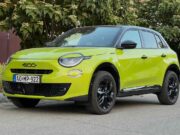














The 2026 Fiat 600 1.2 145 HP 48V MHEV Sport may look like another fashionable little European crossover, but spending real time behind the wheel reveals considerably more substance underneath its unmistakably Italian styling. Its 145-horsepower hybrid system is genuinely useful, the car can move under electric power alone in certain situations, performance is strong enough for sustained highway driving, and its compact exterior dimensions conceal a surprisingly practical interior. There is only one major problem from an American perspective: the car tested here is a European-market model and Fiat does not currently sell this 600 Hybrid in the United States. After driving it extensively, we think that’s a shame, because the 600 combines several qualities that could make a great deal of sense for American buyers looking for something smaller, more efficient and more distinctive than the typical compact crossover.
An Important Note for U.S. Readers: This Is a European-Spec Fiat 600
Before getting into the review, one distinction is essential. The vehicle tested here is a European-market 2026 Fiat 600 1.2 145 HP 48V MHEV Sport. It is not a U.S.-specification vehicle, and the Fiat 600 Hybrid is not currently part of Fiat’s American lineup. That makes this review slightly different from our usual US Car Reviews road tests: rather than evaluating something American buyers can walk into a dealership and purchase today, we’re looking at one of Fiat’s current European products from an American perspective and asking whether a small hybrid crossover like this could make sense on this side of the Atlantic.
It is an especially interesting question because Fiat’s American presence remains tiny compared with the brand’s importance in Europe. For many U.S. buyers, the Fiat name is still associated primarily with the diminutive 500, yet the modern 600 represents a very different interpretation of the company’s traditional formula. It retains the Italian design and relatively compact footprint expected of a Fiat, but wraps those qualities in the crossover body style that has become overwhelmingly important in the American market.
The Fiat 600 Has Found Its Own Personality
The 600 name carries considerable history for Fiat, although the modern crossover has very little in common with the tiny original model beyond its badge and underlying philosophy of packaging as much usefulness as possible into a relatively small vehicle. Today’s 600 measures approximately 164.5 inches long, making it genuinely compact by contemporary American crossover standards, and that relatively modest footprint becomes one of its most appealing characteristics once you begin living with the car.
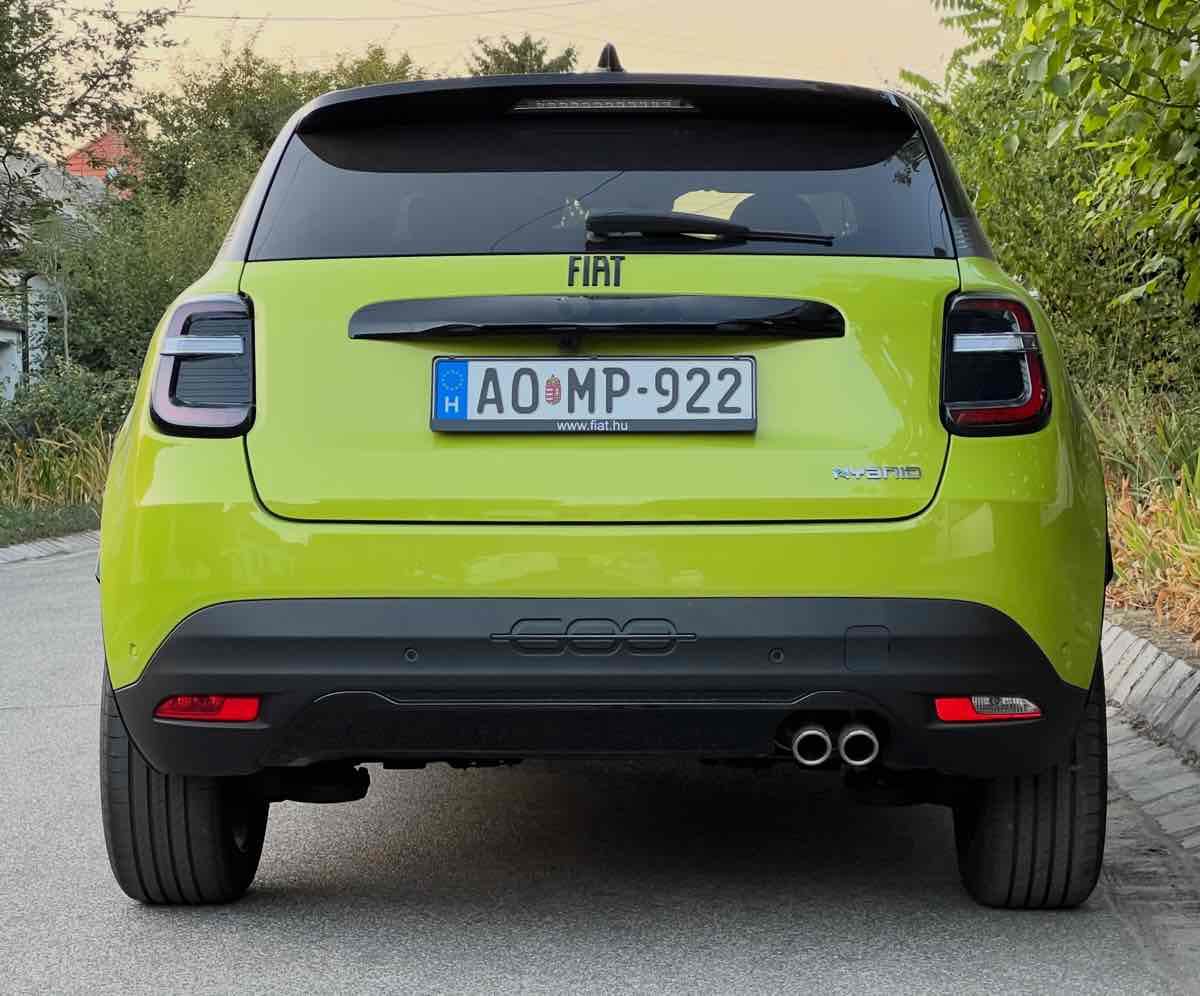
American vehicles continue to grow, but there remains something refreshing about a crossover that provides a useful amount of passenger and cargo space without requiring enormous exterior dimensions. The 600 feels particularly well suited to dense urban environments, crowded parking garages and older city streets. In places such as New York, Boston, San Francisco or densely populated areas of Miami, its size could potentially become a meaningful advantage rather than a limitation.
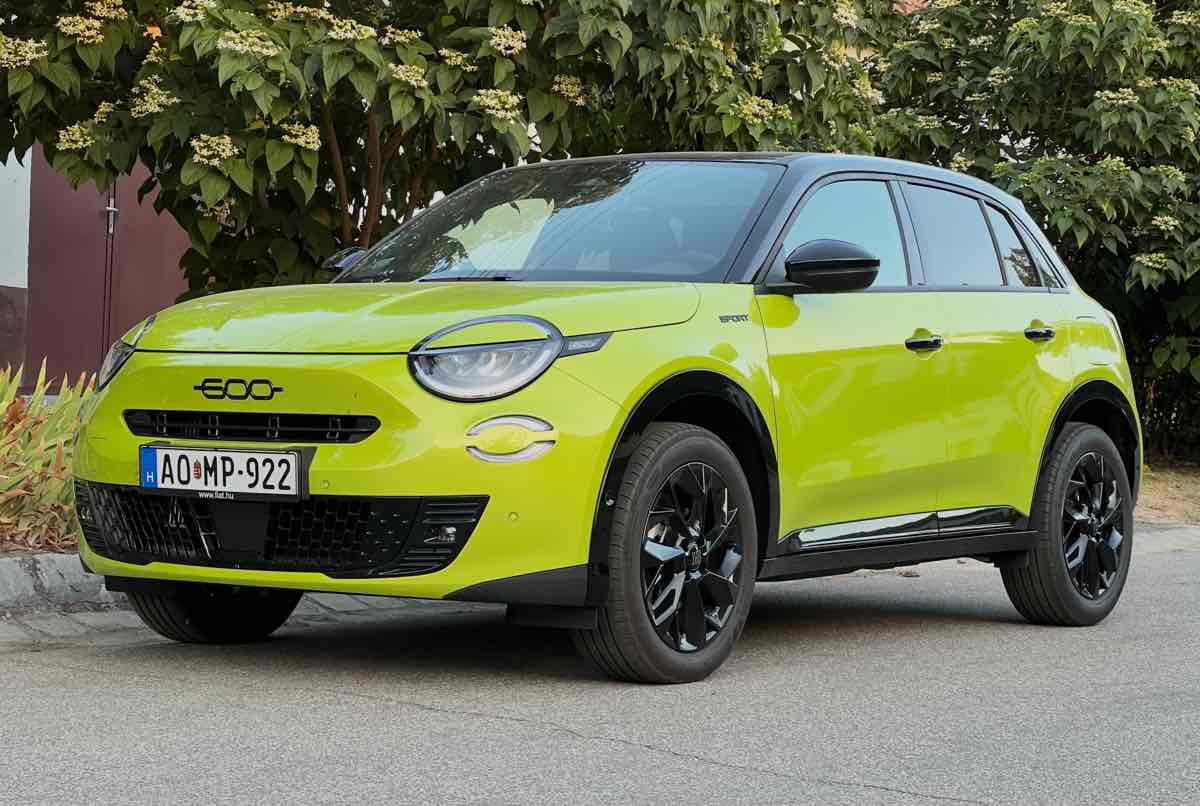
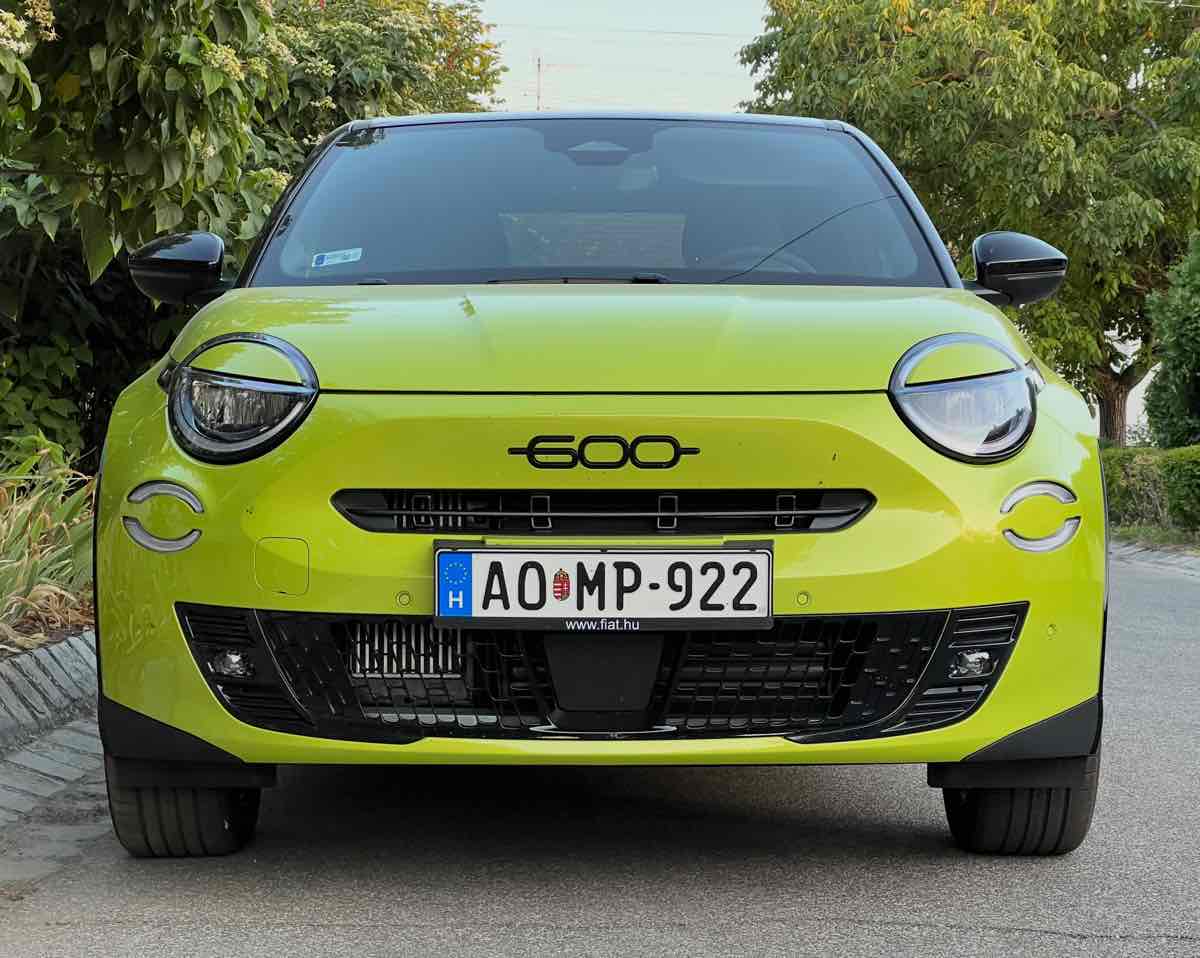
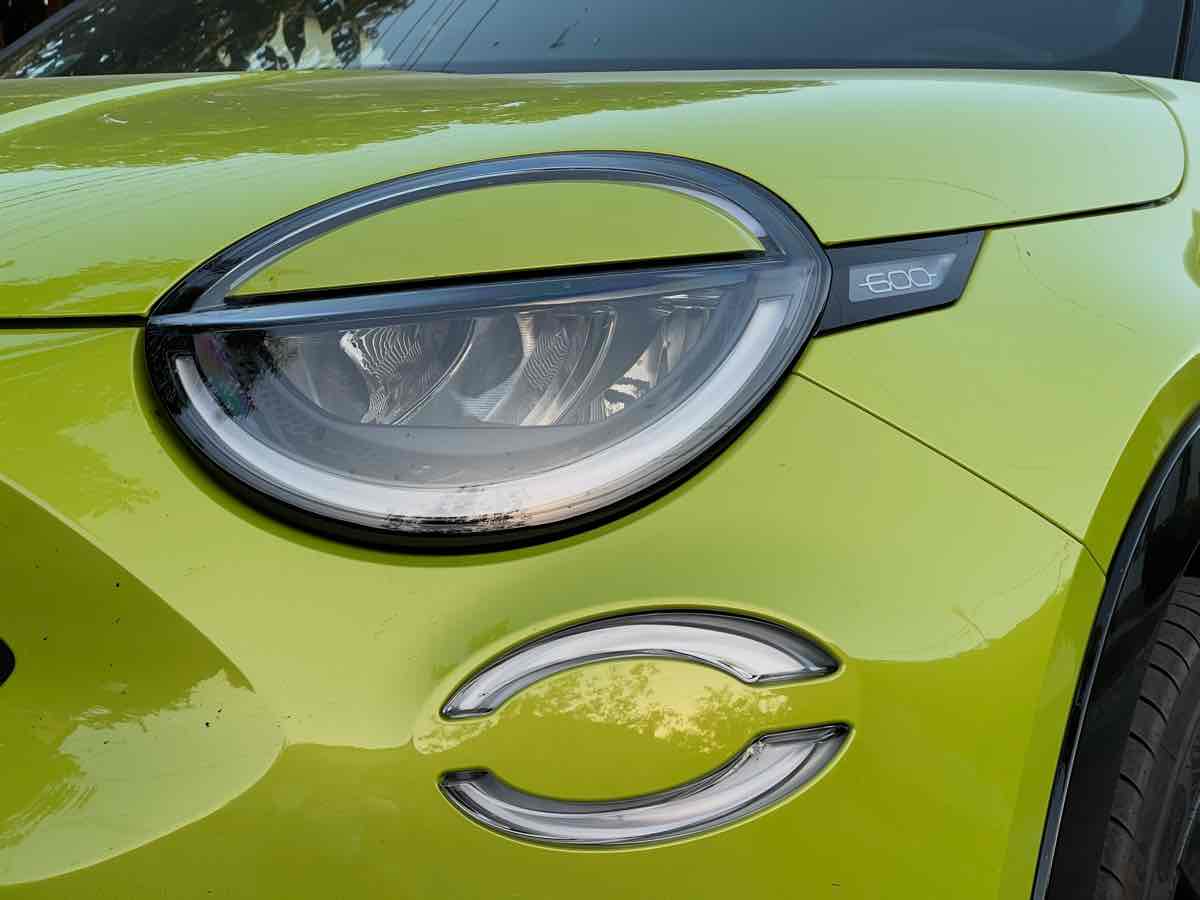
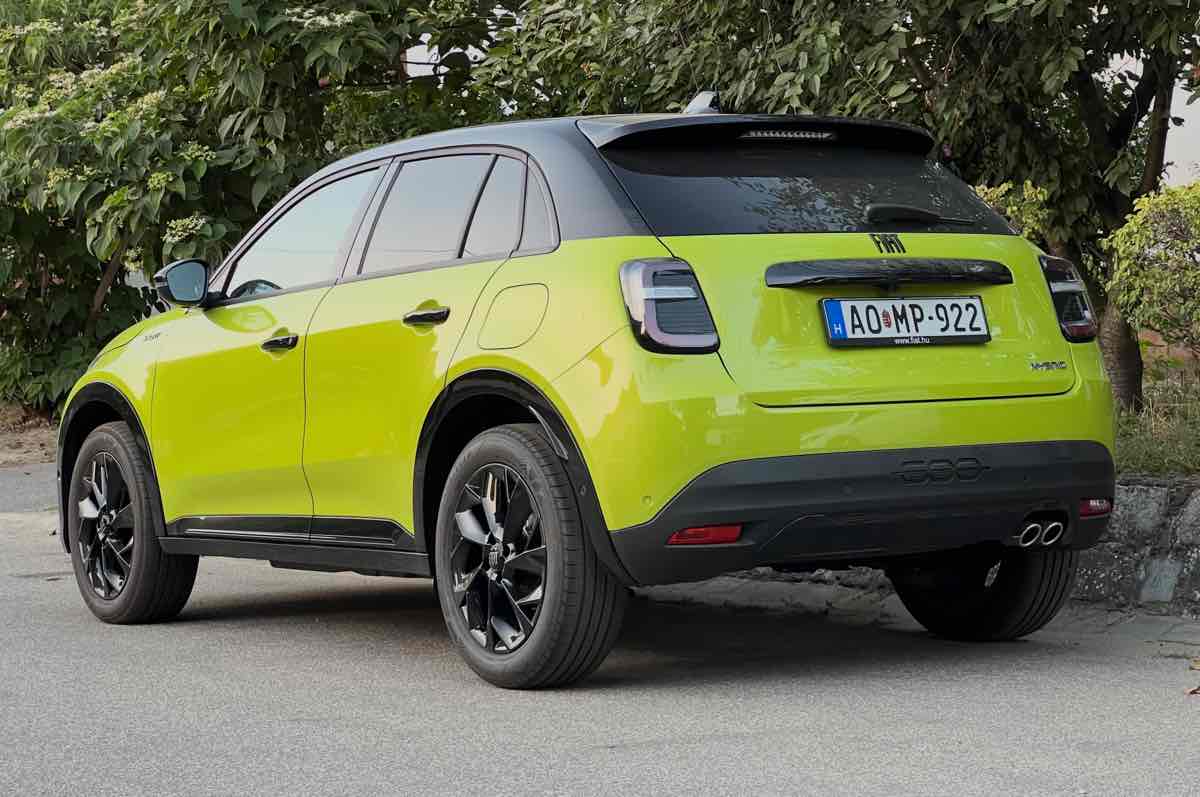
Visually, it is unmistakably a Fiat. The rounded front end, distinctive lighting treatment and generally friendly appearance establish an obvious connection with the 500 family, but the 600 has substantially more road presence and looks considerably more mature. Our Sport version strengthens that impression with black 600 badging, gloss-black wheel-arch trim, 18-inch alloy wheels and several trim-specific details. Thankfully, Fiat hasn’t attempted to transform it into something it isn’t: there are no absurdly oversized spoilers, exaggerated fake air intakes or other performance-car theatrics. Despite the Sport name, this remains an attractive everyday compact crossover, simply presented with a slightly sharper edge.
Italian Design Gives the 600 Something Many Small Crossovers Lack
One of the strongest arguments for the Fiat 600 becomes apparent before you even start the engine: it has genuine personality. That is inevitably a subjective quality, but it matters in a segment increasingly populated by vehicles that are technically competent yet visually interchangeable. Fiat takes a different approach. The 600 isn’t aggressive, doesn’t attempt to look like a miniature off-roader and doesn’t pretend to be a sports car sitting several inches higher off the ground. Instead, it embraces a softer and unmistakably European identity.
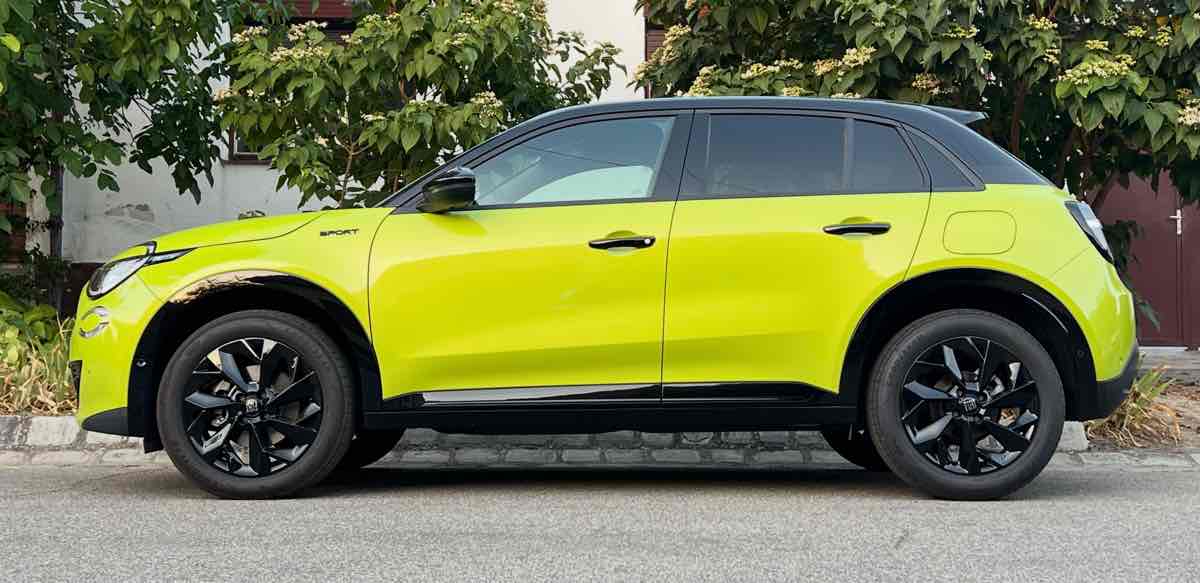
There are clear hints of the 500 throughout the design, particularly around the nose and lighting signatures, but the larger proportions make the 600 feel more substantial without losing the approachable character that has traditionally distinguished Fiat’s smaller cars. The Sport specification suits the design particularly well because its darker trim creates enough contrast to make the car look more purposeful while avoiding the temptation to overstyle it. Parked among the sea of angular crossovers that dominate today’s market, the Fiat manages to stand out precisely because it isn’t trying quite so hard.
The Sport Interior Is More Serious Than the Exterior Suggests
That darker personality continues inside, where Sport models receive a predominantly black interior, distinctive dashboard trim, sportier seats and dark door panels. The resulting cabin feels noticeably more substantial than the cheerful exterior might lead you to expect, while retaining enough unusual shapes and design details to prevent the interior from becoming generic. More importantly, the Fiat remains refreshingly easy to understand. Basic functions don’t require an expedition through endless touchscreen menus, the driving position is easy to configure, visibility is good, and the controls become familiar almost immediately.
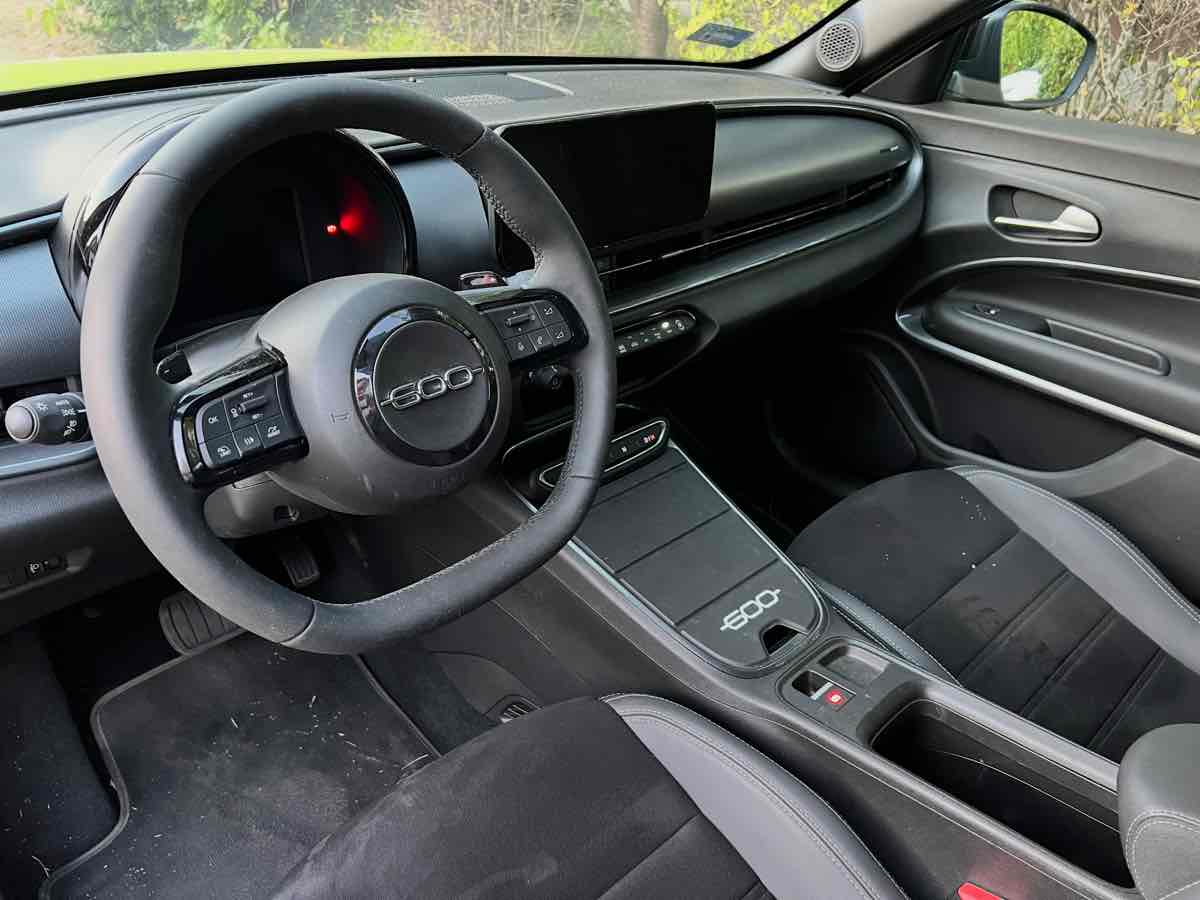
The seats are comfortable and provide enough support for longer journeys, making the 600 a more convincing long-distance vehicle than its city-friendly dimensions initially suggest. Material quality is less impressive, with several hard plastics around the cabin reminding you that this remains fundamentally a mainstream Fiat rather than a premium European crossover. Clever design, contrasting surfaces and interesting shapes nevertheless make the environment feel considerably better than the raw materials alone might suggest. Fiat has historically been good at creating visual character without relying exclusively on expensive materials, and the 600 continues that tradition effectively.
The 145-HP Hybrid Powertrain Is the Biggest Surprise
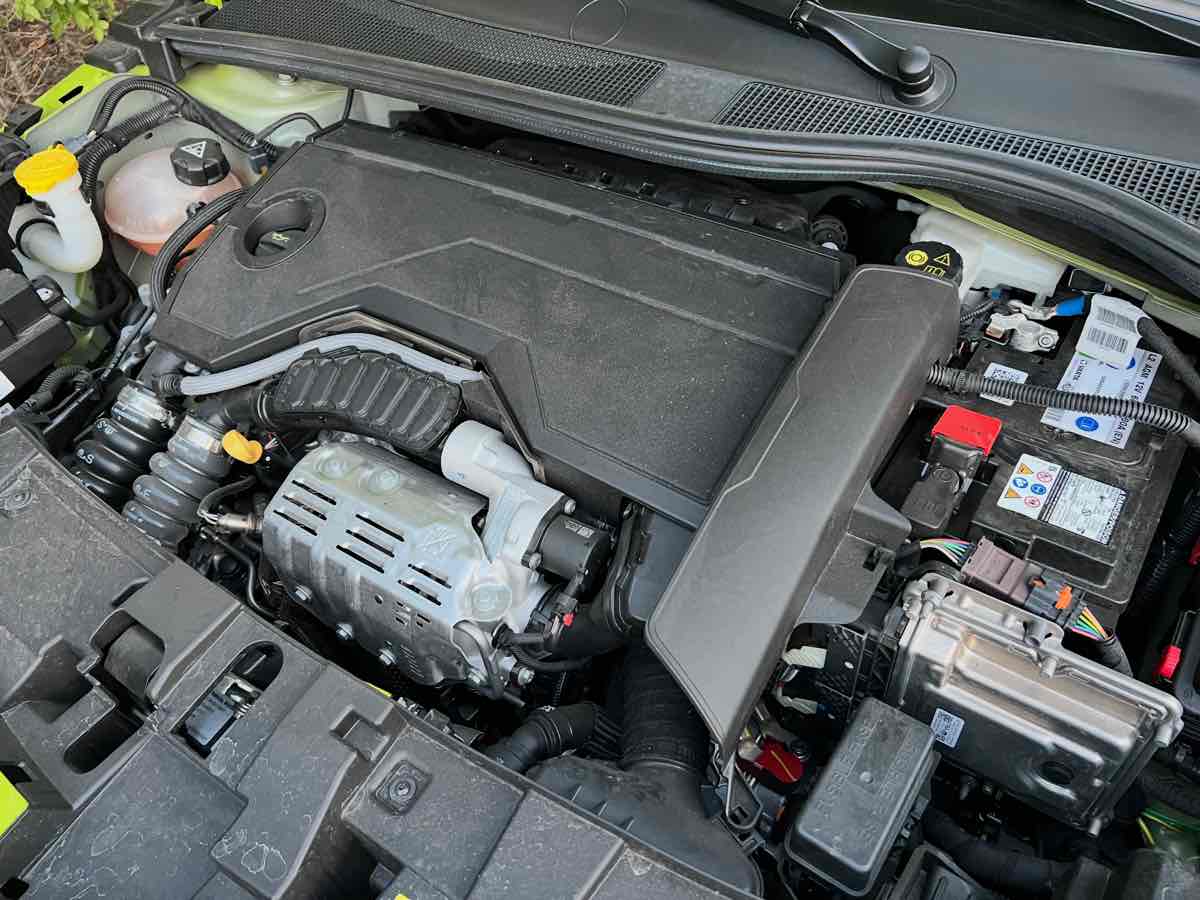
This is where the Fiat 600 becomes particularly interesting. Under the hood is a 1.2-liter turbocharged three-cylinder gasoline engine combined with a 48-volt hybrid system. The combustion engine produces 136 horsepower, while an electric motor integrated into the transmission contributes additional assistance, resulting in a combined system output of 145 horsepower. Maximum torque reaches 230 Nm, equivalent to approximately 170 lb-ft, and power is sent exclusively to the front wheels through a six-speed eDCT dual-clutch automatic transmission.
Those figures may not sound particularly exciting to American drivers accustomed to seeing 250 or 300 horsepower even in relatively ordinary crossovers, but context matters. The Fiat weighs only around 2,820 pounds, so the power-to-weight relationship is considerably healthier than the headline output suggests. Around town, electric assistance makes initial acceleration feel responsive without forcing the little three-cylinder engine to work unnecessarily hard, while at higher speeds there is enough power available to make overtaking and highway merging comfortable rather than stressful.
Fiat quotes a 0–100 km/h time of approximately 8.5 seconds, equivalent to 0–62 mph, while top speed is around 124 mph. This obviously isn’t a performance crossover, but on the road it rarely feels underpowered. The difference becomes especially noticeable on faster European highways, where sustained cruising speeds can be higher than those typically encountered on U.S. Interstates. The 145-hp version doesn’t produce the slightly breathless sensation sometimes associated with small European crossovers once speeds increase. It can merge confidently, pass slower traffic and maintain high cruising speeds without feeling as though the engine is permanently operating at its limit. Even around 80 mph, useful acceleration remains available, which suggests that for normal American freeway use the 600 Hybrid would have more than sufficient performance.
Calling This Simply a “Mild Hybrid” Doesn’t Tell the Whole Story
The MHEV designation can be slightly misleading because most Americans familiar with 48-volt mild-hybrid technology probably expect a system that assists the gasoline engine, improves stop-start operation and recovers some energy during deceleration. The Fiat can do considerably more than that. Under appropriate conditions and particularly at low speeds, the electric motor can actually propel the vehicle while the gasoline engine remains switched off. That becomes especially noticeable when parking, maneuvering or creeping through slow-moving traffic, where the car can quietly move forward without immediately restarting the combustion engine.
It doesn’t suddenly transform the 600 into a Toyota-style full hybrid, and the electric-only distances involved remain limited, but the ability fundamentally changes how useful the electrification feels in everyday driving. Instead of the hybrid components operating almost invisibly in the background simply to improve laboratory efficiency numbers, the driver can actually experience periods of electric propulsion. In congested urban conditions, the 600 therefore behaves more like a conventional hybrid than its “mild hybrid” badge might suggest.
There is also no charging port and no charging routine to think about. Owners don’t need to install a Level 2 charger at home, search for public charging stations or plan longer trips around charging stops. You simply fill the approximately 11.6-gallon fuel tank and drive, while the small 48-volt lithium-ion battery is replenished through regenerative braking and the vehicle’s own hybrid system. For American drivers interested in electrification but unwilling or unable to commit to a battery-electric vehicle, this kind of technology could make considerable sense because the efficiency benefits require virtually no behavioral change from the owner.
The Six-Speed eDCT Is Central to the Hybrid Experience
The six-speed dual-clutch automatic transmission plays an important role in making the hybrid powertrain work. During relaxed driving it shifts smoothly, moves into higher gears relatively early and works closely with the electrical system to maximize opportunities for electric assistance. The result is a drivetrain that generally fades into the background during normal commuting, which is exactly what an everyday hybrid should do.
Ask for maximum acceleration, however, and there can be a short delay while the transmission selects the appropriate gear, the gasoline engine becomes fully involved and turbo boost builds. Anyone accustomed to the instantaneous response of a battery-electric vehicle will notice it, although it isn’t serious enough to undermine the overall driving experience. Once the different elements of the drivetrain come together, the 600 accelerates with surprising enthusiasm for a 1.2-liter three-cylinder crossover.
Sport Doesn’t Mean Uncomfortable
The Sport badge might suggest significantly firmer suspension and more aggressive handling, but Fiat has wisely resisted that temptation. The 600 remains primarily a comfortable everyday crossover, using independent MacPherson struts at the front and a torsion-beam arrangement at the rear. Suspension tuning clearly favors comfort, and although the 18-inch wheels inevitably transmit more road imperfections than smaller wheels would, particularly over broken urban pavement, the ride never becomes unnecessarily harsh.
There is some body roll when the car is pushed harder through corners, but its behavior remains predictable and easy to understand. Steering is light, making the Fiat exceptionally easy to maneuver around town and simple to position in tight parking spaces, although we would prefer greater feedback at higher speeds. This isn’t the sort of crossover that makes you wake up early on Sunday morning specifically to find an empty mountain road, but that isn’t really the point. The 600 Sport is designed to make everyday driving easy while providing enough chassis competence to remain composed when the road becomes more interesting.
European Dimensions Could Actually Be an Advantage in America
One of the most interesting aspects of living with the 600 is just how easy it is to use. At roughly 164.5 inches long and 70 inches wide without the mirrors, it is small by contemporary American crossover standards, yet it still accommodates five occupants and offers approximately 13.6 cubic feet of cargo capacity behind the rear seats. Fold those seats down and maximum cargo space expands to around 44.4 cubic feet, giving the Fiat genuine versatility despite its modest exterior dimensions.
That combination could make the 600 particularly appealing as an American city vehicle. It occupies significantly less road and parking space than many compact SUVs while still providing the elevated seating position, hatchback practicality and crossover appearance buyers increasingly expect. There is also approximately 8.1 inches of ground clearance, which doesn’t turn the front-wheel-drive Fiat into an off-roader but does provide the raised stance and useful everyday clearance associated with a crossover.
For drivers who don’t regularly need three rows of seats or the ability to tow thousands of pounds, there is a compelling logic to this approach. Instead of carrying unnecessary size and weight everywhere, the 600 packages the features most people actually use into a vehicle that remains genuinely easy to park and maneuver.
Fuel Economy Is Another Major Strength
Official European WLTP combined consumption for the 145-hp hybrid sits around 4.8–4.9 liters per 100 kilometers, which mathematically converts to approximately 48–49 mpg U.S. American readers should treat that conversion carefully, however, because WLTP and EPA fuel-economy testing procedures are different. A direct mathematical conversion does not mean the Fiat would receive a 48- or 49-mpg EPA rating if it were certified for sale in the United States.
What the European figures do demonstrate is the basic efficiency of the powertrain. This is a crossover capable of useful highway performance and reasonably energetic acceleration while consuming remarkably little gasoline, and unlike a plug-in hybrid those efficiency benefits aren’t dependent on the owner regularly connecting the car to an electrical outlet. The combination of a relatively lightweight body, small turbocharged engine, regenerative braking and meaningful electric assistance makes the entire package feel coherent rather than electrified simply for marketing purposes.
Where the Fiat 600 Hybrid Impresses Most
The 145-hp powertrain fits the 600 exceptionally well because it removes almost any feeling that choosing a small and efficient vehicle requires accepting weak performance. We also appreciate the compact dimensions, elevated seating position, straightforward controls and surprisingly mature highway manners. Most importantly, the hybrid system contributes something noticeable to the driving experience. Electric creeping and maneuvering make the 48-volt architecture feel more meaningful than systems where mild-hybrid technology appears to exist primarily to shave a small amount from official fuel-consumption numbers.
There is also something increasingly rare here: character. The Fiat feels Italian, and that’s a compliment. It has visual personality without sacrificing everyday usability, while the combination of unusual design and clever packaging gives the 600 an identity of its own. It isn’t simply another Stellantis crossover wearing a Fiat badge; from behind the wheel and from the driver’s seat, there are enough distinctive details to make the vehicle feel like a genuine member of the Fiat family.
There Are Still Areas That Could Be Better
The powertrain could be more refined during transitions between electric and gasoline operation. There are situations where the three-cylinder engine’s restart can be both heard and felt, and the transmission can hesitate briefly when maximum acceleration is suddenly requested. Neither issue is severe, but greater polish would make the hybrid system feel more sophisticated, particularly given the increasingly high standard set by conventional full hybrids.
Some interior plastics also feel inexpensive, especially when the 600 is configured toward the upper end of its European pricing structure, while additional steering feedback would make the car more engaging on faster roads. The Sport badge itself arguably creates expectations the chassis never really attempts to satisfy. This isn’t a miniature performance SUV, nor does it need to be. Sport should therefore be understood primarily as an appearance and equipment specification rather than a fundamental transformation of the 600’s driving personality.
Would the Fiat 600 Hybrid Make Sense in the United States?
This is perhaps the most interesting question raised by the entire review. As tested, this European-specification vehicle obviously couldn’t simply be transferred unchanged into Fiat’s American dealer network. U.S. safety regulations, emissions certification, equipment requirements, pricing and market positioning would all need to be addressed, and the economics of importing or producing another relatively low-volume Fiat for North America would ultimately determine whether such a decision made business sense.
As a product concept, however, the argument is considerably stronger. The American market has moved overwhelmingly toward crossovers, while Fiat has historically been associated in the United States primarily with tiny hatchbacks. The 600 could potentially bridge those two worlds by retaining the compact dimensions and Italian personality expected from Fiat while delivering the elevated driving position, practical five-door body and crossover styling American buyers generally prefer.
The hybrid version could be particularly relevant because it avoids one of the major barriers facing EV adoption. There is no charging requirement, yet owners still receive useful electrification, regenerative braking, low-speed electric operation, automatic transmission and excellent fuel economy. Whether enough American customers would buy one at the price Fiat would need to charge is a separate question, but from behind the wheel the product itself makes a surprisingly convincing argument.
Verdict: One European Fiat We’d Like to See in America
The Fiat 600 1.2 145 HP 48V MHEV Sport succeeds not because it dominates any individual category, but because the complete package works remarkably well. It is small enough for crowded cities yet practical enough for a small family, comfortable without feeling excessively soft, quick enough for serious highway use without pretending to be a performance vehicle, and electrified without requiring a charging cable or any meaningful change in the owner’s daily routine.
The automatic transmission makes everyday driving effortless, while the unusually capable 48-volt hybrid system gives the car an additional layer of refinement and efficiency. Most importantly, the 600 has something that can’t easily be represented on a specification sheet: personality. There are plenty of technically accomplished compact crossovers that become almost impossible to remember five minutes after stepping out of them. The Fiat 600 isn’t one of them.
For now, American buyers should remember that the 145-hp Fiat 600 Hybrid Sport reviewed here is a European-market vehicle and is not currently offered as a U.S.-spec model. Having driven it extensively in Europe, however, we can’t help thinking that Fiat’s American lineup would become considerably more interesting if that eventually changed.
2026 Fiat 600 1.2 145 HP 48V MHEV Sport Specifications
Vehicle tested: European-market Fiat 600 1.2 145 HP 48V MHEV Sport
U.S. availability: Not currently offered as a U.S.-spec model
Engine and Drivetrain
Engine: 1.2-liter turbocharged three-cylinder gasoline engine
Displacement: 1,199 cc
Valvetrain: 12 valves
Induction: Turbocharged
Fuel: Gasoline
Hybrid system: 48V mild hybrid
Gasoline engine output: 136 hp (100 kW)
Electric motor output: 28 hp (21 kW)
Combined system output: 145 hp (107 kW)
Maximum torque: 230 Nm / approximately 170 lb-ft
Drivetrain: Front-wheel drive
Transmission: Six-speed eDCT dual-clutch automatic
Hybrid System
Electrical architecture: 48 volts
Battery: Lithium-ion
Battery capacity: 0.876 kWh
Electric motor location: Integrated into dual-clutch transmission
Regenerative braking: Yes
External charging: No
Low-speed electric driving: Yes, under appropriate conditions
Electric parking and maneuvering: Supported
Performance
0–62 mph (0–100 km/h): 8.5 seconds
Top speed: 124 mph (200 km/h)
Fuel Economy and Emissions
Combined WLTP consumption: 4.8–4.9 L/100 km
Approximate mathematical U.S. conversion: 48–49 mpg
EPA rating: Not available; European WLTP figures are not directly comparable with EPA testing
Combined CO₂ emissions: 109–110 g/km
European emissions standard: Euro 6e
Fuel tank: 44 liters / approximately 11.6 U.S. gallons
Dimensions
Length: 4,178 mm / 164.5 in
Width without mirrors: 1,779 mm / 70.0 in
Width including mirrors: 1,981 mm / 78.0 in
Height: approximately 1,525 mm / 60.0 in
Wheelbase: 2,557 mm / 100.7 in
Ground clearance: approximately 205 mm / 8.1 in
Weight and Towing
Curb weight: approximately 1,280 kg / 2,822 lb
Maximum braked trailer weight (European specification): 1,100 kg / approximately 2,425 lb
Cargo and Practicality
Seating capacity: 5
Cargo capacity, rear seats up: 385 liters / approximately 13.6 cu ft
Maximum cargo capacity, rear seats folded: 1,256 liters / approximately 44.4 cu ft
Rear seat: Split-folding
Suspension and Steering
Front suspension: Independent MacPherson strut
Rear suspension: Torsion beam
Steering: Electric power-assisted
Turning circle: Approximately 10.5 meters / 34.4 ft
Brakes
Front brakes: Ventilated discs, 302 × 26 mm
Rear brakes: Disc
Parking brake: Electronic
ABS: Standard
Electronic stability control: Standard
Regenerative braking: Yes
More pictures about this Fiat 600 at: https://www.autoaddikt.hu