





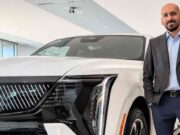














Cadillac is reinforcing a fundamental principle of luxury automotive marketing: building lasting customer relationships requires much more than attractive vehicles, advanced technology, and competitive pricing. Through the experience of Haard Parikh, Marketing Segment Manager at Cadillac Canada, General Motors is highlighting how dealership relationships, regional market knowledge, and emotional connections influence purchasing decisions. His journey from district sales operations to Cadillac’s marketing organization offers an insightful perspective on how one of America’s most recognizable luxury automotive brands approaches customer loyalty in an increasingly competitive industry.
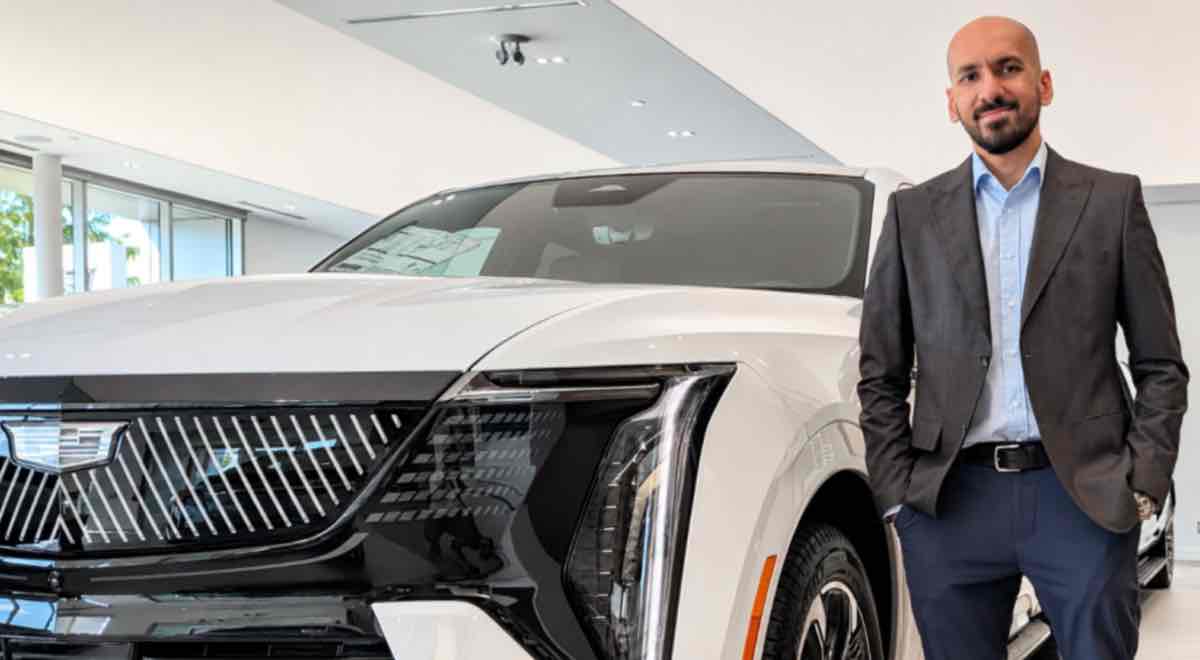
Luxury Automotive Marketing Starts With Understanding Customers
The automotive industry has undergone a remarkable transformation over the past decade. Electrification, digital retailing, connected vehicle technologies, and changing consumer expectations have fundamentally altered how manufacturers communicate with potential buyers.
However, one important aspect of automotive retailing has remained remarkably consistent: customers often make purchasing decisions based on emotional connections rather than purely financial considerations.
For Cadillac, understanding these relationships is an essential part of maintaining its position in the luxury automotive market.
Haard Parikh, who joined General Motors in 2022 after working in brand and digital marketing for other automotive manufacturers, discovered this firsthand during his time working directly with dealerships.
One particularly memorable customer had developed a tradition of purchasing a new Chevrolet Silverado every couple of years around their birthday.
Other customers maintained relationships with General Motors brands spanning multiple generations.
These examples demonstrated that brand loyalty extends well beyond product specifications, promotional incentives, or purchase prices.
For some customers, choosing a particular vehicle becomes part of their personal identity.
From Corporate Marketing to the Dealership Floor
Before joining Cadillac’s marketing organization, Parikh worked in General Motors’ District Sales operations, where he gained direct experience with dealership networks and regional automotive markets.
His responsibilities included managing sales performance and market-share objectives while maintaining relationships with dealers.
The position provided a perspective that traditional corporate marketing roles cannot always deliver.
Instead of evaluating marketing effectiveness exclusively through digital analytics, advertising performance, and sales reports, Parikh could observe how strategies influenced actual customer behavior.
He also discovered that successful automotive marketing requires considerable flexibility.
A campaign that performs exceptionally well in one region might generate disappointing results elsewhere.
Local demographics, consumer preferences, purchasing habits, and even established media consumption patterns can significantly influence the effectiveness of marketing initiatives.
This became particularly apparent as Parikh worked across different Canadian markets, including the Greater Toronto Area and Southwestern Ontario.
Why Traditional Advertising Still Matters in a Digital World
One of the most interesting lessons from Parikh’s dealership experience involved the continued relevance of traditional advertising.
With a professional background in digital marketing, he naturally placed considerable emphasis on search advertising, social media, and online promotional campaigns.
However, one dealership continued investing heavily in local radio advertising.
Initially, Parikh questioned whether this traditional approach could deliver results comparable to modern digital marketing channels.
The dealership’s performance ultimately demonstrated that radio remained an effective way to reach customers in its particular market.
The experience highlighted an important distinction between national marketing strategies and local consumer behavior.
Digital advertising offers sophisticated targeting capabilities and detailed performance measurement, but these advantages do not automatically make traditional channels ineffective.
For Cadillac and other automotive manufacturers, the implication is significant.
A successful national marketing strategy must provide enough flexibility for dealerships to communicate with customers through the channels that work best in their communities.
Rather than applying identical advertising approaches across every market, manufacturers can benefit from combining centralized brand positioning with regional expertise.
The Right Vehicles Matter More Than Inventory Numbers Alone
Parikh’s experience also revealed how dealership feedback can uncover problems that might not be immediately apparent in corporate reporting.
During his district sales responsibilities, Chevrolet Equinox and Blazer inventory levels appeared satisfactory when evaluated through conventional metrics.
However, discussions with dealers revealed a more complicated situation.
Although sufficient vehicles were available, the specific configurations did not always align with local customer preferences.
This distinction is especially important in the automotive industry, where trim levels, equipment packages, powertrains, and individual features can significantly influence purchasing decisions.
A dealership might have an adequate supply of vehicles while still struggling to satisfy demand for the configurations customers actually want.
The lesson extends beyond inventory management.
It demonstrates why automotive manufacturers must continually compare centralized planning assumptions with information gathered directly from dealerships.
For luxury brands such as Cadillac, this feedback can be particularly valuable because customers frequently have specific expectations regarding vehicle equipment, personalization, comfort, and technology.
Cadillac’s Marketing Strategy Goes Beyond the Vehicle
In January 2026, Parikh transitioned into his current position as Marketing Segment Manager with Cadillac.
After nearly four years of working closely with dealerships and customers, he returned to marketing with a broader understanding of the automotive purchasing experience.
His approach now incorporates an important consideration: a marketing strategy must work not only at the corporate level but also when individual dealerships introduce it to customers.
This is particularly relevant in the luxury segment.
A premium vehicle can offer impressive performance, sophisticated materials, advanced driver-assistance technologies, and innovative infotainment systems.
However, the ownership experience also depends on how customers are treated before, during, and after the purchase.
Dealership interactions, product explanations, financing discussions, service appointments, and ongoing customer support all contribute to the perception of a luxury brand.
For Cadillac, the dealership is therefore more than a distribution channel.
It represents an important part of the brand experience itself.
A positive dealership relationship can reinforce customer confidence and encourage repeat purchases, while an unsatisfactory experience can undermine even the strongest product offering.
Cadillac’s EV & Hybrid Owner Bonus Demonstrates the Approach
One example of this customer-focused philosophy is Cadillac’s EV & Hybrid Owner Bonus initiative.
When Cadillac introduced the program, Parikh’s team incorporated regional market insights into its implementation.
The objective was to help dealerships understand how the incentive could be presented effectively to customers in their respective markets.
This approach illustrates the importance of connecting national marketing initiatives with local retail conditions.
A promotional program may be developed centrally, but its effectiveness ultimately depends on whether dealership personnel can communicate its benefits clearly and appropriately.
The initiative also reflects the changing dynamics of luxury vehicle ownership as Cadillac continues developing its electrified portfolio.
Customers considering an electric luxury vehicle may approach the purchasing process with different questions and expectations than those shopping for a conventional gasoline-powered model.
Charging convenience, driving range, vehicle technology, and long-term ownership considerations can all influence the decision.
Consequently, the dealership’s ability to understand individual customer priorities becomes increasingly important.
Emotional Connections Remain Essential to Brand Loyalty
One of the strongest themes emerging from Parikh’s experience is the emotional dimension of automotive ownership.
Modern vehicles are frequently compared using measurable characteristics such as horsepower, acceleration, efficiency, driving range, safety technology, and price.
These specifications undoubtedly matter.
However, they do not fully explain why some customers repeatedly purchase vehicles from the same manufacturer.
A Cadillac owner might associate the brand with family history, professional achievement, American automotive heritage, or a memorable ownership experience.
Such connections cannot necessarily be replicated through promotional discounts or technical improvements alone.
They develop through a combination of product satisfaction, personal experiences, and consistent brand communication.
The customer who repeatedly purchased a Chevrolet Silverado around their birthday represents a particularly memorable example.
For that individual, purchasing a vehicle had become more than a routine financial transaction.
It was a personal tradition.
Understanding how these relationships develop can help Cadillac create marketing initiatives that resonate beyond conventional advertising messages.
Regional Knowledge Can Strengthen a National Luxury Brand
Cadillac operates within an automotive industry where manufacturers must balance consistent brand identity with the different expectations of individual markets.
This creates a challenge for marketing organizations.
A luxury brand needs recognizable messaging, a coherent product identity, and consistent standards.
At the same time, customers in major metropolitan areas may have different preferences from those in smaller communities or rural regions.
Parikh’s experience suggests that successful marketing requires both perspectives.
National strategies establish the broader direction, while dealership feedback helps determine how those strategies should be implemented locally.
The same principle applies to customer relationships.
Understanding why people choose a Cadillac in the first place can be just as important as understanding why existing owners return for another vehicle.
For manufacturers competing in the premium segment, this combination of brand consistency and regional adaptability can help support long-term customer relationships.
A Different Perspective on Career Development at General Motors
Beyond its implications for Cadillac’s marketing strategy, Parikh’s professional journey also highlights the value of cross-functional experience within General Motors.
His transition from automotive marketing into district sales and subsequently back into a marketing leadership role demonstrates how experience across different business functions can influence strategic decision-making.
Rather than following a strictly linear career path, Parikh expanded his understanding of the industry by working directly with dealership operations.
The experience gave him greater insight into how marketing decisions affect retailers and customers.
It also helped him develop a more comprehensive view of the relationship between corporate objectives and real-world business conditions.
For General Motors, this kind of internal mobility can support the exchange of knowledge between departments that might otherwise approach challenges from different perspectives.
Why Cadillac’s Customer-First Philosophy Matters
Cadillac’s ongoing development as a luxury automotive brand involves much more than introducing new vehicles or expanding its technology portfolio.
Maintaining strong customer relationships requires a consistent experience across marketing, retail operations, and ownership support.
Parikh’s experience demonstrates how valuable direct dealership knowledge can be when developing strategies intended for a broad customer base.
It also reinforces the importance of recognizing that automotive purchasing decisions are not always entirely rational or predictable.
Customers respond to personal experiences, established relationships, local market conditions, and emotional associations with individual brands.
These factors can be difficult to quantify, but they remain central to long-term loyalty.
As Cadillac continues navigating an evolving luxury automotive market, combining sophisticated marketing strategies with practical dealership experience offers a way to keep customers at the center of its business.
Ultimately, the most important question may not be what persuades someone to purchase their first Cadillac.
It may be what makes them want to return for their next one.