























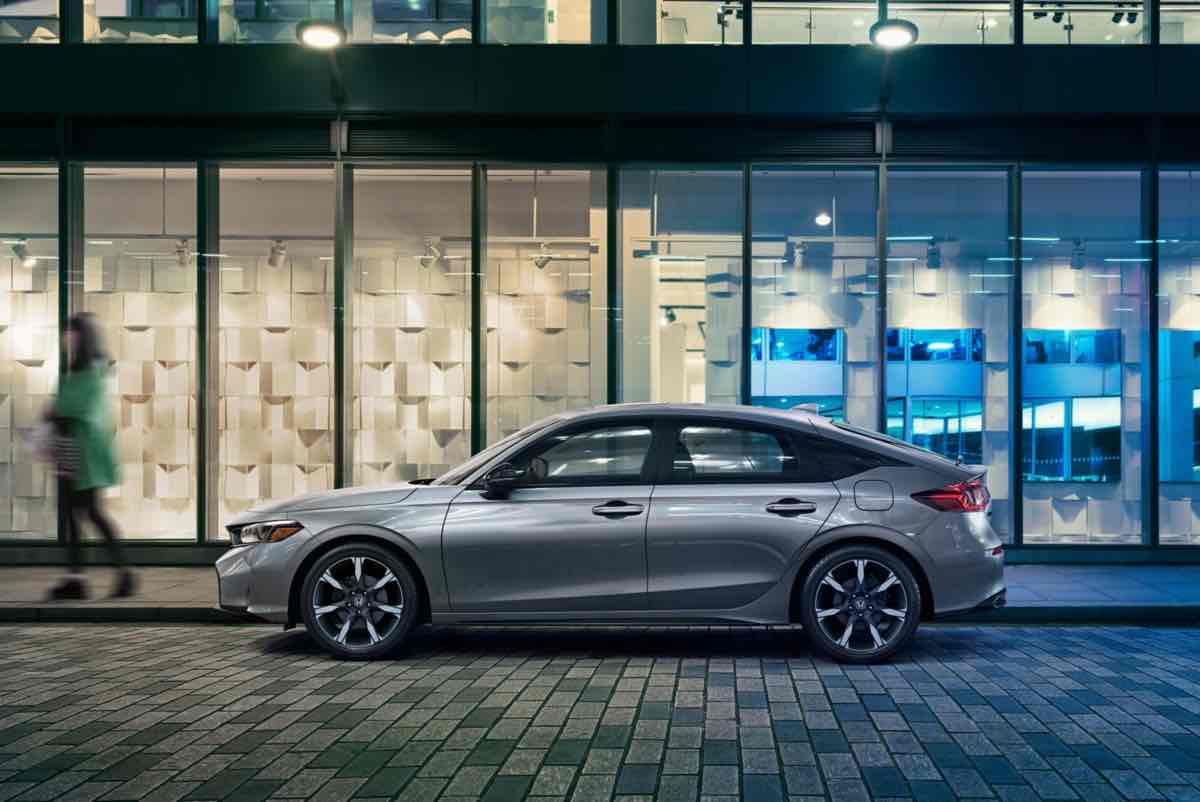
The 2027 Honda Civic is arriving at dealerships across America with an expanded lineup, more premium features, and an innovative new driving experience for hybrid enthusiasts. Honda is introducing the first-ever Civic Sport-L trim, bringing leather upholstery, heated and power-adjustable front seats, and dual-zone climate control to a more affordable price point. Meanwhile, the range-topping Sport Touring Hybrid gains Honda’s S+ Shift technology, designed to deliver a more engaging driving experience through simulated gear changes and enhanced engine sounds. With a starting MSRP of $24,995, the 2027 Civic continues to build on its reputation as one of America’s most successful and accessible compact cars.
The 2027 Honda Civic Builds on a Winning Formula
The Honda Civic has spent decades establishing itself as one of the most recognizable and successful compact cars in the American automotive market. Known for its reliability, everyday usability, fuel efficiency, and surprisingly enjoyable driving characteristics, the Civic continues to attract a remarkably diverse audience.
For the 2027 model year, Honda is refining that formula rather than attempting to reinvent it. The latest updates focus on making desirable equipment more accessible while introducing additional technology that strengthens the Civic’s appeal among drivers who appreciate a more engaging experience behind the wheel.
Both the Civic Sedan and Civic Hatchback are beginning to reach dealerships nationwide, with the newly introduced Sport-L trim scheduled to join the lineup by the end of 2026.
The expansion is particularly important because the Civic competes in a segment where affordability remains a major purchasing consideration. Buyers want modern technology, premium comfort features, attractive styling, and excellent fuel economy, but they are not necessarily willing to pay the premium associated with larger or more expensive vehicles.
Honda’s answer is to provide more meaningful choices within the existing Civic family, especially for customers who want luxury-oriented equipment without moving into the hybrid lineup.
New Civic Sport-L Brings Premium Features to a Lower Price Point
The biggest addition to the 2027 Honda Civic lineup is the introduction of the Sport-L trim, positioned between the existing Sport and Sport Hybrid models.
Until now, several desirable comfort and convenience features were reserved for the more expensive hybrid variants. The Sport-L changes that arrangement by making many of those upgrades available with the conventional 2.0-liter gasoline engine.
The new trim features leather upholstery, heated front seats, power-adjustable front seats, and dual-zone automatic climate control. These additions substantially elevate the Civic’s everyday comfort, particularly for drivers who spend considerable time commuting or traveling longer distances.
Honda has also included a passenger-side seatback pocket, illuminated vanity mirrors, and silver-colored interior trim previously associated with higher-level Civic configurations.
Although these individual additions might appear relatively modest, their combined effect is significant. Heated seats and dual-zone climate control are features buyers increasingly expect in well-equipped compact vehicles, while leather seating and power adjustments create a more upscale cabin atmosphere.
For customers who prefer a traditional gasoline-powered Civic but want the comfort and convenience features of a higher trim, the Sport-L fills an obvious gap in the range.
The 2027 Civic Sport-L Sedan starts at $28,495, excluding destination and handling. That places it just $1,500 above the regular Civic Sport Sedan, while remaining $1,200 below the entry-level Sport Hybrid Sedan.
This relatively narrow price difference makes the Sport-L a particularly interesting proposition for buyers who prioritize interior comfort over maximum fuel economy.
The Sport-L Retains Honda’s Proven 2.0-Liter Gasoline Engine
Under the hood, the 2027 Civic Sport-L uses the familiar 2.0-liter gasoline engine paired with a continuously variable transmission (CVT).
Honda’s decision to retain this conventional powertrain gives buyers an alternative to the increasingly popular Civic Hybrid models without compromising the core characteristics that have made the gasoline-powered Civic successful.
The emphasis remains on predictable performance, smooth operation, and efficient daily transportation.
The Civic Sport-L Sedan carries an EPA-estimated fuel economy rating of 31 mpg city, 39 mpg highway, and 34 mpg combined. Those figures match the regular Civic Sport Sedan, indicating that the additional comfort equipment does not change the published fuel economy ratings.
The Sport-L Hatchback delivers an EPA-estimated 30 mpg city, 38 mpg highway, and 34 mpg combined.
For buyers covering substantial highway mileage, those numbers remain attractive, particularly considering the Civic’s relatively affordable purchase price and practical everyday character.
However, the gasoline-powered Sport-L also highlights an increasingly interesting decision within the Civic range: whether to spend additional money on premium interior features or move directly to a substantially more fuel-efficient hybrid powertrain.
Honda now offers convincing options for both types of customers.
Honda S+ Shift Adds a New Dimension to Hybrid Driving
While the Sport-L broadens the Civic’s appeal among traditional gasoline buyers, the most technically interesting update for 2027 is reserved for the Civic Sport Touring Hybrid.
Honda is introducing S+ Shift, an innovative driving mode originally developed for the 2026 Honda Prelude.
The system is designed to address one of the common criticisms of modern hybrid powertrains: although electrified vehicles can deliver excellent acceleration and outstanding efficiency, their driving characteristics do not always provide the direct mechanical sensation enthusiasts associate with conventional performance cars.
Honda S+ Shift attempts to create a more engaging connection between the driver and the vehicle by simulating the behavior of a performance-oriented transmission.
Instead of simply allowing the hybrid powertrain to operate in its normal continuously managed fashion, the system introduces simulated gear changes, virtual rev-matched downshifts, and gear-holding behavior.
Enhanced engine sounds accompany those simulated shifts, adding another layer of sensory feedback.
The objective is not to transform the Civic Hybrid into a conventional manual-transmission sports car. Rather, Honda is using software and powertrain management to recreate some of the sensations drivers associate with a more traditional performance driving experience.
This approach is especially interesting because the technology originates from the revived Honda Prelude, a model developed with a strong emphasis on combining hybrid efficiency and driver enjoyment.
Bringing S+ Shift to the Civic Sport Touring Hybrid could make the feature accessible to a considerably broader audience.
How S+ Shift Changes the Driving Experience
In a conventional performance car, gear changes play an important role in the driver’s connection with the vehicle. Engine speed rises and falls, acceleration changes with each shift, and downshifting can provide an immediate sense of mechanical involvement.
Many modern electrified powertrains eliminate or substantially reduce those sensations in the interest of smoothness and efficiency.
Honda’s S+ Shift technology takes a different approach by introducing simulated transmission behavior into the hybrid driving experience.
Virtual rev-matched downshifts are particularly interesting because they recreate the familiar increase in engine speed associated with selecting a lower gear in a conventional transmission.
The gear-holding function further reinforces the impression that the driver is operating a vehicle with distinct transmission ratios, while the enhanced engine soundtrack complements the experience.
Importantly, these are simulated characteristics rather than physical shifts through a conventional multi-speed performance transmission.
That distinction matters because the Civic Hybrid retains its electrified powertrain architecture. S+ Shift changes the way drivers experience the system rather than fundamentally replacing its underlying mechanical operation.
Whether drivers find the technology genuinely engaging will ultimately depend on real-world testing, but the concept is promising.
For Honda, the introduction also signals that hybrid development is no longer focused exclusively on efficiency and emissions. Driver enjoyment remains an important part of the company’s engineering philosophy.
The 2027 Civic Hybrid Continues to Deliver Outstanding Fuel Economy
Despite the introduction of S+ Shift, efficiency remains one of the strongest arguments for choosing a Civic Hybrid.
The 2027 Civic Sport Hybrid Sedan starts at $29,695, while the more extensively equipped Sport Touring Hybrid Sedan carries a starting MSRP of $32,695.
Both models achieve EPA-estimated fuel economy ratings of 50 mpg city, 47 mpg highway, and 49 mpg combined.
Those numbers represent a substantial improvement over the conventional gasoline-powered Civic variants, particularly in urban driving conditions.
The hybrid Hatchback models are similarly efficient, delivering EPA estimates of 50 mpg city, 44 mpg highway, and 47 mpg combined.
These figures demonstrate why the Civic Hybrid has become such an important part of Honda’s compact-car strategy.
According to Honda, hybrid versions account for more than 30% of Civic sales in 2026, reflecting the growing popularity of electrified powertrains among American buyers.
The Civic Hybrid also received the prestigious 2025 North American Car of the Year award, reinforcing its position as one of the most accomplished vehicles in the compact segment.
With S+ Shift now available on the Sport Touring Hybrid, Honda is adding an extra dimension to a powertrain that already delivers a compelling combination of efficiency and everyday performance.
2027 Honda Civic Sedan Pricing and Fuel Economy
Honda continues to offer the Civic Sedan in five configurations, providing a relatively straightforward progression from affordable entry-level transportation to a premium-equipped hybrid compact.
The Civic LX remains the most affordable model, starting at $24,995. It uses the 2.0-liter gasoline engine and CVT, returning EPA estimates of 32 mpg city, 41 mpg highway, and 36 mpg combined.
The Civic Sport, priced from $26,995, adds a more sport-oriented configuration while retaining the same basic gasoline powertrain. Its EPA fuel economy estimates are 31 mpg city, 39 mpg highway, and 34 mpg combined.
The new Civic Sport-L starts at $28,495 and introduces its additional premium comfort features without changing the Sport Sedan’s published fuel economy ratings.
Above it sits the Civic Sport Hybrid, starting at $29,695. Its hybrid powertrain delivers a combined EPA rating of 49 mpg, making it one of the most fuel-efficient choices in the lineup.
At the top of the Sedan range, the Civic Sport Touring Hybrid starts at $32,695 and adds the newly available S+ Shift driving mode for 2027.
All prices exclude Honda’s $1,295 destination and handling charge.
Including that charge, the Civic Sedan lineup ranges from $26,290 for the LX to $33,990 for the Sport Touring Hybrid.
2027 Honda Civic Hatchback Pricing and Fuel Economy
The Civic Hatchback continues to provide a practical alternative for buyers who prefer a more versatile body style.
Unlike the Sedan, the Hatchback lineup begins with the Sport trim rather than an LX configuration.
The Civic Hatchback Sport starts at $28,195 and uses the 2.0-liter gasoline engine with a CVT. Its EPA-estimated fuel economy is 30 mpg city, 38 mpg highway, and 34 mpg combined.
The new Civic Hatchback Sport-L starts at $29,695, offering the same additional comfort-oriented equipment introduced on the Sport-L Sedan. Fuel economy remains identical to the regular gasoline-powered Hatchback Sport.
Moving into electrification, the Civic Hatchback Sport Hybrid starts at $30,895 and achieves an EPA-estimated 50 mpg city, 44 mpg highway, and 47 mpg combined.
The range-topping Civic Hatchback Sport Touring Hybrid carries a starting MSRP of $33,895 and adds S+ Shift for the 2027 model year.
Including the $1,295 destination charge, total suggested retail prices range from $29,490 for the Hatchback Sport to $35,190 for the Hatchback Sport Touring Hybrid.
The Hatchback therefore commands a premium over equivalent Sedan configurations, but its flexible cargo area and wider rear opening may justify the additional expense for buyers who regularly transport bulky luggage or other equipment.
Honda Sensing Remains Standard Across the Entire Civic Lineup
Honda is continuing its commitment to active safety by equipping every 2027 Civic with the Honda Sensing suite of driver-assistance technologies.
The standard package includes the Collision Mitigation Braking System with Pedestrian Detection, Adaptive Cruise Control, Lane Keeping Assist System, Forward Collision Warning, and Road Departure Mitigation incorporating Lane Departure Warning.
These technologies are designed to support drivers during everyday situations, including highway travel, congested traffic, and potentially hazardous road conditions.
All Sport models also feature a blind spot information system with Rear Cross Traffic Alert, providing additional assistance when changing lanes or reversing in areas where approaching vehicles may be difficult to see.
The inclusion of these systems across the lineup is particularly significant at the Civic’s price point.
Advanced driver-assistance features were once associated primarily with expensive luxury vehicles, but Honda has worked to make them standard equipment across much of its portfolio.
Since introducing Honda Sensing in 2014, the company has installed the technology suite in more than 10 million vehicles in the United States.
These features do not replace the driver’s responsibility to remain attentive, but they add another important layer of protection to a vehicle frequently purchased by younger drivers and first-time car buyers.
The Civic Remains a Favorite Among Younger American Buyers
One of the most impressive aspects of the Honda Civic’s continued success is its ability to appeal to multiple generations of drivers.
The nameplate has been part of the American automotive landscape since 1973, and Honda reports that more than 13 million Civics have been sold during its history in the United States.
The current 11th-generation Civic also plays a particularly important role in attracting new customers to the Honda brand.
According to Honda, the Civic is America’s most popular vehicle among Generation Z, first-time buyers, and multicultural customers.
That broad appeal is not difficult to understand.
The Civic combines relatively manageable dimensions, attractive styling, practical interiors, modern safety technology, and a range of efficient powertrains. It also offers a level of driving enjoyment that helps distinguish it from purely utilitarian transportation.
Affordability remains another critical factor.
Honda points out that the average transaction price of a new Civic in 2026, including hybrid models, is below the industry’s average used-vehicle transaction price.
That comparison is particularly notable in a market where the cost of both new and used vehicles remains a significant concern for many consumers.
By keeping the entry-level Civic below $25,000 before destination charges, Honda continues to offer an accessible starting point for customers entering the new-car market.
At the same time, the expanded lineup provides opportunities for buyers to move into more sophisticated configurations without leaving the Civic family.
Built in North America: Honda’s Established Manufacturing Network
Production of the 2027 Civic continues to rely on Honda’s extensive North American manufacturing operations.
The Civic Hatchback is manufactured at Honda’s automobile plant in Greensburg, Indiana, using domestic and globally sourced components.
The Civic Sedan is built at Honda of Canada Manufacturing in Alliston, Ontario.
Honda’s hybrid powertrain production also has important connections to its American manufacturing facilities.
The two-motor hybrid-electric power unit is produced at the Honda Ohio Transmission Plant, while the 2.0-liter Atkinson-cycle four-cylinder engine used by the hybrid system is manufactured at the Honda Anna Engine Plant.
This manufacturing structure reflects Honda’s long-established investment in North American vehicle and powertrain production.
The company has built more than 12 million Civics in North America, including over five million in the United States.
For American buyers, the Civic’s production footprint provides an important reminder that the Japanese automaker has become deeply integrated into the continent’s automotive manufacturing industry.
Sport-L or Sport Hybrid: Which 2027 Civic Makes More Sense?
Perhaps the most interesting buying decision introduced by the updated Civic lineup involves the new Sport-L and the existing Sport Hybrid.
In Sedan form, the Sport-L starts at $28,495, while the Sport Hybrid costs $29,695.
That represents a difference of only $1,200.
The Sport-L makes a strong case for buyers who want leather upholstery, power-adjustable seating, heated front seats, and dual-zone climate control without stepping into a more expensive hybrid configuration.
For customers who primarily value interior comfort and prefer a conventional gasoline powertrain, it offers a logical combination of features and value.
However, the Sport Hybrid presents an equally compelling alternative.
Its EPA-estimated combined fuel economy of 49 mpg compares with 34 mpg for the Sport-L Sedan, giving the hybrid a considerable efficiency advantage.
Drivers covering substantial annual mileage, particularly in city and suburban conditions, may find that the hybrid’s additional purchase price is justified by lower fuel consumption over time.
The final choice will depend on individual priorities, annual mileage, fuel prices, and the importance of specific comfort features.
Meanwhile, buyers wanting both a premium equipment package and the most engaging available hybrid driving experience will likely find the Sport Touring Hybrid the most attractive configuration.
Its S+ Shift technology adds an enthusiast-oriented feature that the less expensive Civic models do not offer.
The 2027 Honda Civic Strengthens an Already Successful Compact-Car Formula
The 2027 Honda Civic does not represent a radical transformation of Honda’s longest-running automotive nameplate, but it introduces two developments that could meaningfully improve the ownership experience.
The new Sport-L trim makes several premium features accessible to buyers who previously needed to consider higher-priced hybrid models.
At the same time, the addition of S+ Shift to the Sport Touring Hybrid reinforces Honda’s determination to preserve driving enjoyment as electrification becomes increasingly important.
These changes address two different but equally relevant priorities: everyday comfort and emotional engagement.
Combined with the Civic’s established strengths in efficiency, practicality, safety, and value, they make the 2027 lineup even more versatile.
With Sedan and Hatchback body styles, conventional gasoline and hybrid powertrains, and pricing spanning from approximately $25,000 to $34,000 before destination charges, the Civic continues to cover an unusually broad range of compact-car buyers.
The first 2027 Civic models are arriving at American Honda dealerships now, with the new Sport-L trim expected before the end of 2026.
For shoppers looking for an affordable, well-equipped compact car with a reputation built over more than five decades, the 2027 Honda Civic remains one of the most compelling choices in the American market.