
















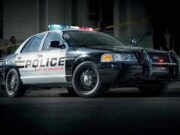





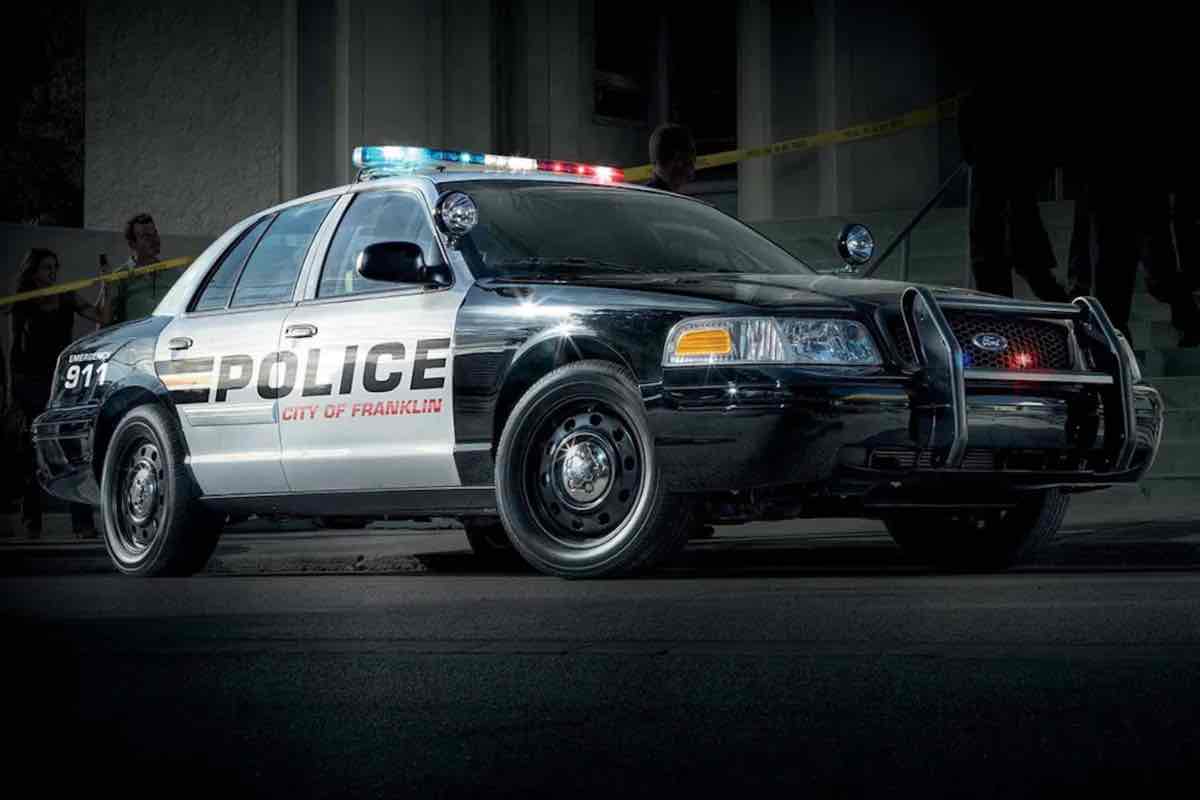
Few vehicles are as instantly associated with American law enforcement as the Ford Crown Victoria. For decades, the big rear-wheel-drive sedan patrolled highways, responded to emergencies, appeared in countless police chases and became a permanent fixture of American streets. The Crown Victoria Police Interceptor wasn’t particularly sophisticated, luxurious or technologically advanced. Instead, it succeeded because it was tough, spacious, relatively inexpensive to operate and remarkably well suited to the brutal life of a police vehicle.
The Crown Victoria Became the Face of American Law Enforcement
Picture a traditional American police car from the 1990s or 2000s and there’s a good chance you’re imagining a Ford Crown Victoria.
The full-size Ford became ubiquitous across the United States, serving with city police departments, county sheriff’s offices, state agencies and numerous other government organizations.
Its distinctive proportions made it unmistakable: a long hood, large passenger compartment, substantial trunk and traditional sedan profile.
But its extraordinary popularity wasn’t simply the result of successful fleet marketing.
The Crown Victoria possessed a combination of characteristics that made it exceptionally well suited to police work.
And one of the most important was underneath the body.
Its Body-on-Frame Construction Was a Major Advantage
Unlike most modern passenger cars, the Crown Victoria used traditional body-on-frame construction.
The body and chassis were essentially separate structures, an approach much more commonly associated today with pickup trucks and large SUVs.
For ordinary passenger-car buyers, that architecture wasn’t necessarily an advantage. For police departments, however, it offered some important benefits.
Police vehicles endure an unusually difficult life.
They spend enormous amounts of time idling. They repeatedly accelerate hard from a stop. They can travel at high speeds for extended periods, frequently drive over curbs and rough surfaces and may be involved in collisions or PIT maneuvers.
Durability therefore matters enormously.
The Crown Victoria’s rugged construction could withstand considerable punishment, while its relatively straightforward architecture made repairs practical for large fleet maintenance departments.
When you’re operating hundreds or even thousands of vehicles, ease of repair can matter almost as much as outright performance.
A Simple 4.6-Liter V-8 Was Exactly What Police Fleets Needed
Under the hood sat another major ingredient in the Crown Victoria formula: Ford’s 4.6-liter V-8.
It wasn’t an exotic engine, and even by the later years of Crown Victoria production it certainly wasn’t cutting-edge technology.
That was almost beside the point.
Police departments weren’t shopping for exotic engineering. They needed engines capable of accumulating huge mileage while spending countless hours idling and operating under demanding conditions.
The 4.6-liter V-8 developed a reputation for durability and straightforward maintenance.
Parts were widely available, mechanics were familiar with the engine, and the enormous number of Ford vehicles using related components helped keep servicing relatively straightforward.
For fleet operators, predictability was extremely valuable.
A vehicle that can be maintained quickly and returned to service is far more useful than one requiring complicated or expensive repairs.
Rear-Wheel Drive Added to the Traditional Police-Car Formula
The Crown Victoria also retained rear-wheel drive at a time when most mainstream American passenger cars were transitioning toward front-wheel-drive layouts.
For law-enforcement use, the traditional configuration had several advantages.
Separating steering duties at the front from power delivery at the rear contributed to predictable handling, particularly during demanding driving situations.
The layout also suited the Crown Victoria’s relatively large dimensions and V-8 powertrain.
It wasn’t a sports sedan, but the combination of a large-displacement engine, rear-wheel drive and a police-specific chassis created a vehicle capable of handling high-speed highway patrol work while remaining manageable during everyday urban duty.
The Police Interceptor Was More Than a Crown Vic With Lights
One reason for the Crown Victoria’s success was that Ford didn’t simply sell police departments an ordinary civilian sedan and leave them to modify it.
The Crown Victoria Police Interceptor was engineered specifically around law-enforcement requirements.
Police-duty versions received upgrades intended to survive workloads that ordinary passenger cars would rarely experience.
Depending on model year and configuration, police-specific equipment included heavy-duty suspension components, upgraded cooling systems, stronger electrical equipment and other modifications designed around continuous fleet use.
The electrical system was particularly important.
A police vehicle isn’t simply powering headlights, climate control and a radio. Depending on the department and era, it may need to support emergency lighting, communications equipment, computers, cameras and other specialized electronics.
That demands significantly more from the electrical system than normal civilian driving.
There Was Room for Officers and Their Equipment
Size was another major advantage.
Police officers can spend much of an entire shift inside their patrol vehicle, often while wearing bulky equipment.
A compact cabin isn’t ideal when the driver is wearing a duty belt, body armor and other gear.
The Crown Victoria offered the spaciousness expected from a traditional American full-size sedan.
There was enough room up front for officers and police equipment, while the rear compartment could be adapted for prisoner transport.
Then there was the trunk.
The Crown Victoria’s large luggage compartment could swallow an impressive amount of equipment, making it useful for carrying emergency supplies, traffic-control equipment, medical kits and other tools needed during patrol duty.
That practicality was difficult for smaller sedans to match.
Fleet Economics Made the Crown Victoria Even More Attractive
Police departments don’t purchase vehicles the same way individual customers do.
The purchase price matters, but total operating cost can be even more important.
A large fleet needs replacement parts, tires, brakes, servicing, accident repairs and ongoing maintenance. Mechanics need to understand the vehicles, and departments need a reliable supply chain for components.
Once thousands of Crown Victorias were already in service, the economics became increasingly attractive.
Parts were plentiful. Fleet mechanics knew the cars inside and out. Departments already had experience maintaining them, and standardized fleets simplified everything from servicing to driver familiarity.
Replacing a proven Crown Victoria with an entirely different platform therefore required more than simply purchasing another car.
It could mean changing an entire support ecosystem.
That helped the Crown Vic maintain its position for years.
The Crown Victoria Was Designed to Take Abuse
The life of a typical passenger car is relatively easy compared with a police cruiser.
Consider what a patrol vehicle may experience during a single shift.
Long periods of idling can suddenly be followed by full-throttle acceleration. High-speed driving may transition immediately into heavy braking. The car may climb curbs, cross rough surfaces, sit running for hours in extreme temperatures and repeat the entire process day after day.
Then another shift may begin with another officer behind the wheel.
This is where the Crown Victoria’s relatively old-school engineering became one of its greatest strengths.
It wasn’t optimized primarily around low weight, maximum fuel economy or sophisticated technology.
It was essentially a large, mechanically straightforward workhorse disguised as a sedan.
And for police departments, that was exactly what was needed.
Why Police Departments Kept Buying Them
Fleet standardization created another powerful reason for departments to stay with the Crown Victoria.
Once an agency had dozens or hundreds of them, purchasing additional Crown Vics was easy.
Maintenance departments already understood the platform. Replacement parts were already stocked. Officers already knew how the cars behaved.
Equipment installation could also be standardized.
There was little incentive to introduce an entirely different vehicle unless the replacement offered substantial benefits.
As a result, the Crown Victoria developed a remarkable feedback loop: the more departments used it, the easier it became to continue using it.
That helped establish a level of market dominance that would be extremely difficult for any modern police vehicle to reproduce.
It Wasn’t Necessarily the Fastest Police Car
Interestingly, the Crown Victoria’s reputation can sometimes make it seem more powerful than it actually was.
The Police Interceptor was certainly capable enough for patrol duties, but raw horsepower wasn’t the primary reason departments loved it.
There were faster police vehicles.
What mattered was the overall package.
The Crown Victoria offered sufficient performance combined with durability, space, relatively affordable maintenance and a chassis that could tolerate relentless fleet use.
For a police department, a slightly quicker 0–60 mph time matters far less if the vehicle costs considerably more to keep operational.
The Crown Vic’s brilliance was therefore not about dominating a specification sheet.
It was about doing virtually everything reasonably well while surviving an extraordinarily demanding working environment.
Then the Automotive World Changed
By the late 2000s, however, the Crown Victoria’s age was becoming increasingly obvious.
The same characteristics that had made it such an effective police vehicle were becoming liabilities in the civilian automotive market.
Body-on-frame sedans had virtually disappeared. Fuel economy was becoming increasingly important. Vehicle safety technology was advancing rapidly, and consumers were migrating away from traditional large sedans.
SUVs and crossovers were becoming dominant.
Police departments were changing too.
Modern law-enforcement vehicles could offer sophisticated all-wheel-drive systems, more efficient powertrains, improved packaging and newer safety and electronic technologies.
The Crown Victoria formula had worked extraordinarily well, but the industry around it had evolved.
Ford Ended Crown Victoria Production in 2011
Production of the Crown Victoria ultimately ended in 2011, bringing an extraordinary chapter of American automotive history to a close.
Yet the car didn’t immediately disappear from American roads.
Police departments continued operating Crown Victorias long after production stopped, and retired examples found second careers as taxis, fleet vehicles and privately owned cars.
Their mechanical durability helped many survive years beyond their original law-enforcement service.
Eventually, however, newer police vehicles replaced them.
Ford itself shifted toward a new generation of purpose-built police models, including the SUV-based Police Interceptor Utility.
The transformation reflected the broader American vehicle market: the traditional full-size sedan was giving way to SUVs.
The Ford Police Interceptor Utility Represents a New Era
Today’s police fleets look noticeably different from those of the Crown Victoria era.
SUV-based patrol vehicles have become increasingly common because they offer useful cargo capacity, available all-wheel drive, easier packaging for modern equipment and greater versatility.
The Ford Police Interceptor Utility became one of the most recognizable examples of this transition.
In purely technological terms, modern police vehicles are vastly more sophisticated than the old Crown Vic.
But sophistication isn’t necessarily what creates an icon.
Hollywood Helped Make the Crown Victoria Immortal
The Crown Victoria’s influence extends far beyond police departments.
It became one of the most recognizable pieces of automotive scenery in American popular culture.
Watch a movie or television show set in an American city during the 1990s or 2000s and Crown Victorias seem to appear everywhere.
Police cars.
Taxis.
Government vehicles.
Unmarked detective cars.
The model became so visually connected with American streets that filmmakers could communicate a vehicle’s purpose almost instantly simply by putting a Crown Victoria on screen.
Its silhouette alone became part of the visual language of American cities.
Video games reinforced that recognition for another generation.
For millions of people who never drove one, the Crown Victoria still became familiar.
Retired Police Interceptors Developed Their Own Enthusiast Following
Ironically, retirement gave the Crown Victoria another life.
Used Police Interceptors eventually became inexpensive ways for private buyers to own a rear-wheel-drive, V-8-powered American sedan with genuine police history.
That created an enthusiast community around the platform.
Some owners preserve former police cars in near-original condition, while others modify them into performance builds, sleepers or unusual project cars.
Their appeal isn’t difficult to understand.
The formula sounds almost impossible in today’s mainstream market: a large American sedan, naturally aspirated V-8, rear-wheel drive, rugged chassis and relatively straightforward mechanical components.
What once seemed conventional has gradually become unusual.
Why the Crown Victoria Became a Legend
The Ford Crown Victoria Police Interceptor wasn’t successful because of one revolutionary feature.
In fact, almost the opposite was true.
Its success came from combining proven technologies in exactly the right way.
The body-on-frame construction was tough. The V-8 was dependable. The cabin was spacious. The trunk was enormous. Maintenance was straightforward, parts were readily available and Ford offered a police-specific package engineered around fleet requirements.
It was a tool first and an automobile second.
And perhaps that’s the best explanation for its extraordinary longevity.
The Crown Victoria wasn’t trying to impress police departments with luxury or technological novelty. It simply had to start every day, survive enormous abuse, carry everything an officer needed and remain economical enough for large fleets to operate.
It did exactly that for years.
There May Never Be Another Police Car Quite Like It
Modern American police vehicles are faster, safer, more efficient and technologically far more advanced than the Crown Victoria.
But the automotive market is also considerably more diverse.
Departments now choose among SUVs, sedans and specialized vehicles with multiple powertrain configurations and vastly different capabilities.
That makes it difficult for one model to become as universally associated with American policing as the Crown Victoria once was.
For an entire era, the big Ford wasn’t merely a police car.
To millions of Americans, it was the police car.
And more than a decade after the final Crown Victoria left the assembly line, its unmistakable silhouette remains one of the most enduring automotive symbols of American law enforcement.