





























Kia America is putting its expanding hybrid lineup center stage with a new creative campaign that transforms an urban landscape into a giant visual sound system. Called “Hybrids That Move to a New Beat,” the campaign brings together the 2027 Kia Telluride Turbo-Hybrid, Sportage Turbo-Hybrid and Carnival Turbo-Hybrid, while also highlighting the Sorento HEV and Niro HEV as Kia makes a major push to showcase the breadth of its electrified utility-vehicle lineup.
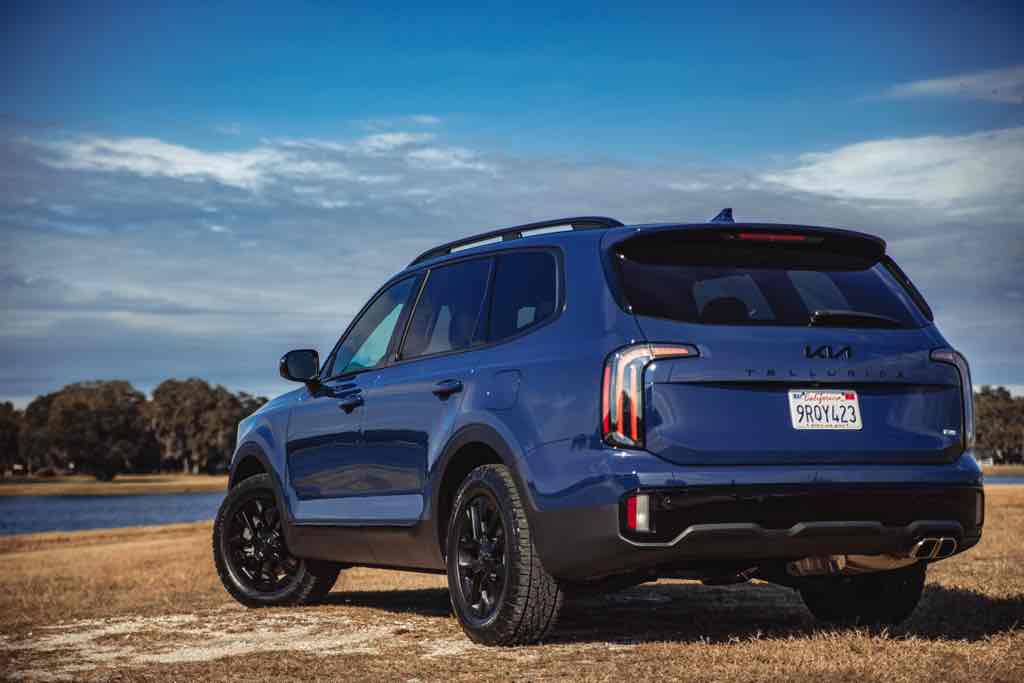
Kia Is Putting Its Growing Hybrid Family in the Spotlight
Hybrid vehicles have evolved from a relatively specialized corner of the market into one of the most important segments of the American automotive industry.
Kia clearly wants buyers to know that it is ready for that transition.
The automaker’s latest advertising campaign focuses not on a single vehicle, but on an entire family of hybrid SUVs and utility vehicles designed for very different types of drivers.
The new campaign, titled “Hybrids That Move to a New Beat,” brings together some of Kia’s most recognizable nameplates, including the Telluride, Sportage, Carnival, Sorento and Niro.
Rather than relying on a conventional efficiency-focused message, Kia is taking a considerably more energetic approach. Performance, design, technology and practicality receive just as much attention as fuel economy.
And the entire campaign is built around music.
The City Becomes a Giant Equalizer
At the center of the campaign is a 30-second commercial that effectively transforms a nighttime city into part of the soundtrack.
The spot uses “OPR” by Grammy-winning French DJ, songwriter and producer Gesaffelstein, giving the commercial an electronic soundtrack that fits its futuristic visual treatment.
The action begins with the 2027 Kia Telluride Turbo-Hybrid accelerating through city streets.
As the Telluride moves through the urban environment, windows across surrounding skyscrapers begin illuminating in synchronization with the music.
The effect turns entire buildings into enormous graphic equalizers, with light patterns moving from one building to another and from block to block.
It’s an unusual way of presenting a family-oriented three-row hybrid SUV, and that’s precisely the point.
Instead of portraying hybrid vehicles simply as sensible fuel-saving transportation, Kia wants them to appear energetic, desirable and technologically sophisticated.
The 2027 Telluride Turbo-Hybrid Takes Center Stage
The Telluride Turbo-Hybrid is the first vehicle viewers see, giving Kia’s flagship three-row SUV a particularly prominent role in the campaign.
Several of its major features are highlighted during the commercial, including its Dual Panoramic Display, three-row seating configuration and available ambient interior LED lighting.
But Kia also emphasizes performance.
The Telluride Turbo-Hybrid delivers 329 horsepower, giving it the kind of output that would have been unusual for a mainstream hybrid family SUV not particularly long ago.
Kia also highlights an estimated 564 miles of total driving range.
Actual range will naturally vary depending on driving conditions, vehicle configuration, driving habits and other factors, but the number demonstrates one of the fundamental advantages that conventional hybrids continue to offer: long-distance capability without depending on charging infrastructure.
That combination could make the hybrid Telluride particularly appealing to families that want improved efficiency without fundamentally changing the way they use their vehicle.
Sportage Turbo-Hybrid Brings a Different Personality
The commercial then shifts its attention to the Sportage Turbo-Hybrid.
While the larger Telluride is shown moving between skyscrapers, the Sportage enters a dark urban tunnel.
That environment allows one of the Sportage’s most distinctive design features to become part of the visual presentation: its daytime running lights.
Against the dark surroundings, the lighting signature becomes a prominent element of the vehicle’s appearance.
It’s another example of how the campaign avoids treating these vehicles simply as efficient alternatives to gasoline models.
Kia instead presents hybrid technology as part of a broader package involving styling, performance and technology.
That distinction is increasingly important as hybrid powertrains become available across mainstream vehicle segments.
Carnival Turbo-Hybrid Shows That the MPV Still Has Plenty of Attitude
Perhaps the most interesting member of the campaign is the Kia Carnival Turbo-Hybrid.
The Carnival occupies a somewhat unusual position in today’s American market. Technically an MPV, it combines traditional minivan practicality with styling deliberately designed to give it more of an SUV-like presence.
Kia leans heavily into that personality in the new commercial.
Rather than showing the Carnival simply transporting passengers or luggage, the campaign depicts the Turbo-Hybrid aggressively negotiating a sharp urban corner as the city’s illuminated buildings continue reacting to the soundtrack.
The message is clear: practicality doesn’t necessarily have to mean boring.
Kia also highlights the Carnival Hybrid’s impressive 608-mile total driving range, further emphasizing the long-distance potential of the hybrid powertrain.
For families regularly taking road trips, that combination of passenger space and range is arguably one of the Carnival Hybrid’s strongest characteristics.
Sorento and Niro Join the Hybrid Convoy
The campaign eventually brings its three main stars together on a multi-lane highway.
But they don’t remain alone.
The Telluride, Sportage and Carnival are joined by the Kia Sorento HEV and Niro HEV, expanding the group to five hybrid vehicles.
Viewed from above, the cars are positioned to resemble controls on a music mixing console.
It’s a clever visual conclusion to the campaign’s music theme, but it also illustrates something Kia clearly wants consumers to notice: the company now has hybrid vehicles spanning several distinctly different segments.
The Niro provides a compact and efficiency-focused option.
The Sportage brings hybrid technology into one of America’s most competitive compact SUV segments.
The Sorento offers additional space and family versatility.
The Carnival approaches the equation from the MPV side.
And the new Telluride Turbo-Hybrid brings electrification to Kia’s flagship three-row SUV.
Together, they create one of the industry’s broadest hybrid utility-vehicle families.
Kia Wants Hybrids to Be About More Than Fuel Economy
For years, hybrid advertising largely revolved around miles per gallon.
Efficiency remains an important reason for choosing a hybrid, of course, but the market has changed dramatically.
Modern hybrid powertrains can also deliver substantial horsepower, strong low-speed response and long overall driving ranges while retaining the convenience of quick gasoline refueling.
Kia’s new campaign reflects that shift.
According to Kia America Vice President of Marketing Russell Wager, the company’s hybrid SUVs and utility vehicles are intended to combine style, power and efficiency, with different models targeting drivers at different stages of life.
That positioning makes sense given the diversity of the current lineup.
Someone considering a Niro is unlikely to have exactly the same priorities as a family shopping for a three-row Telluride, yet hybrid technology can potentially provide advantages in both situations.
The New Telluride Could Be Particularly Important
Among the five vehicles featured, the new Telluride Turbo-Hybrid may ultimately have the greatest significance for Kia’s U.S. lineup.
The Telluride has become one of the brand’s defining American-market vehicles, and adding a hybrid powertrain gives Kia an opportunity to attract customers who want the space and capability of a large three-row SUV while reducing fuel consumption.
Its 329-horsepower output also reinforces an important change in the way hybrid vehicles are being positioned.
Choosing a hybrid no longer necessarily means prioritizing efficiency at the expense of performance.
Instead, electrification can supplement a combustion engine and provide both stronger performance and better overall efficiency.
For a large family SUV, that’s an increasingly compelling combination.
Carnival Hybrid Makes a Strong Case for Electrified Family Transportation
The Carnival’s role shouldn’t be underestimated either.
Traditional minivans and MPVs remain among the most practical passenger vehicles available, particularly for families, yet the segment has faced enormous pressure from SUVs.
Kia has responded by giving the Carnival SUV-inspired styling while retaining the fundamental packaging advantages of an MPV.
Adding a hybrid powertrain strengthens that formula.
With Kia advertising up to 608 miles of total range, the Carnival Turbo-Hybrid is particularly well suited to long-distance family travel, where minimizing fuel stops can become almost as valuable as reducing fuel consumption itself.
The campaign’s decision to portray the Carnival dynamically rather than simply emphasizing passenger capacity is also telling.
Kia doesn’t want buyers to think of it merely as the practical choice.
It wants the Carnival to be desirable as well.
Hybrid Technology Is Becoming Central to Kia’s U.S. Strategy
The timing of the campaign reflects a broader shift across the American market.
Consumers now have more choices than simply gasoline or fully electric vehicles.
Hybrid and plug-in hybrid powertrains increasingly occupy the space between those two extremes, allowing drivers to benefit from electrification without necessarily relying on public charging networks.
Kia’s U.S. portfolio now spans gasoline-powered vehicles, conventional hybrids, plug-in hybrids and fully electric models.
That diversity allows the automaker to approach electrification from several directions rather than depending on a single powertrain strategy.
For buyers who aren’t ready for a fully electric vehicle — or simply don’t have convenient access to charging — conventional hybrids remain an especially straightforward alternative.
There is no charging routine to learn and no need to install home charging equipment. Drivers simply refuel as they would with a conventional gasoline vehicle while the hybrid system manages its electric assistance automatically.
A 360-Degree Campaign Goes Beyond Television
“Hybrids That Move to a New Beat” isn’t limited to a single television commercial.
Kia describes the initiative as a 360-degree campaign encompassing broadcast, print, digital advertising, out-of-home placements and social media.
That broad approach indicates how important the hybrid message has become to the automaker.
Rather than marketing each model independently, Kia is effectively introducing consumers to a complete hybrid ecosystem.
A buyer may enter the showroom interested in a Sportage, for example, but discover that a Sorento better fits a growing family. Someone considering a conventional three-row SUV might instead become interested in the hybrid Telluride.
By presenting the vehicles together, Kia can emphasize the range of choices rather than forcing a single model to carry the entire hybrid message.
Five Hybrids, Five Different Types of Buyers
The strongest part of Kia’s hybrid strategy may ultimately be its variety.
The Niro, Sportage, Sorento, Telluride and Carnival don’t simply represent different sizes of essentially the same vehicle.
They address meaningfully different needs.
The Niro emphasizes compact dimensions and efficiency. The Sportage provides the familiar formula of a mainstream compact SUV. The Sorento adds greater passenger flexibility. The Telluride offers the presence and space expected from a larger three-row SUV, while the Carnival provides an MPV’s family-friendly packaging.
Hybrid technology becomes the common thread connecting them.
That’s also why the new campaign’s musical theme works surprisingly well.
Each vehicle effectively represents a different instrument in the same lineup — different in size, personality and purpose, but connected by the same electrified strategy.
And when Kia’s five hybrids finally come together on that illuminated highway, the message becomes difficult to miss.
The brand isn’t simply adding a few hybrid variants to its lineup anymore.
It’s building an entire family around them.