































Family road trips have a strange kind of magic. They can be exhausting, unpredictable, noisy and occasionally make parents question why they ever thought driving hundreds or even thousands of miles with children was a good idea. Yet somewhere between the bathroom stops, hotel rooms, highway snacks and endless miles, something else happens: families create memories that can last for decades.
Why Family Road Trips Stay With Us
There is something timeless about the classic American family road trip.
For generations, families have packed cars and SUVs until there was barely room left for the passengers, loaded coolers and bags of snacks, and headed onto the highway before sunrise.
For children, the experience can feel like an adventure before the destination even comes into view.
Predawn departures become part of the story. So do blankets piled into the back seat, favorite snacks carefully rationed throughout the day and the hypnotic sight of taillights disappearing into the distance.
An 800-mile day might sound exhausting to an adult. To a child, however, it can become one of those strangely vivid memories that remains intact decades later.
And that may be one of the most important things about traveling as a family: parents and children aren’t necessarily experiencing the same trip.
The Road Trip You Remember Isn’t the One Your Parents Remember
Childhood memories have a remarkable ability to filter out the logistical difficulties.
A child may remember staring out the window at mountains.
The parents may remember calculating whether the family could reach the next gas station before someone needed another bathroom break.
The kids remember the hotel swimming pool.
The parents remember unloading luggage after spending ten hours behind the wheel.
Children remember opening a special snack they only get on vacation. Parents remember trying to keep four kids entertained while simultaneously navigating hundreds of miles of interstate.
Years later, however, those difficulties often fade.
What remains is the adventure.
That’s exactly what makes revisiting the classic family road trip from the perspective of a parent such an interesting experience.
Sixteen Years Later, It Was Finally Time
For Micah Weber, the idea of taking his own children on a major road trip had existed for years.
His childhood included long family journeys up and down the West Coast, often following his father’s work. Those trips weren’t always vacations in the conventional sense. Many were practical journeys from one place to another.
But they left a lasting impression.
Later in life, the idea of recreating that experience became one of those familiar parenting dreams: someday, the family would load up the vehicle, head across America and explore the country’s national parks together.
The timing never seemed quite right.
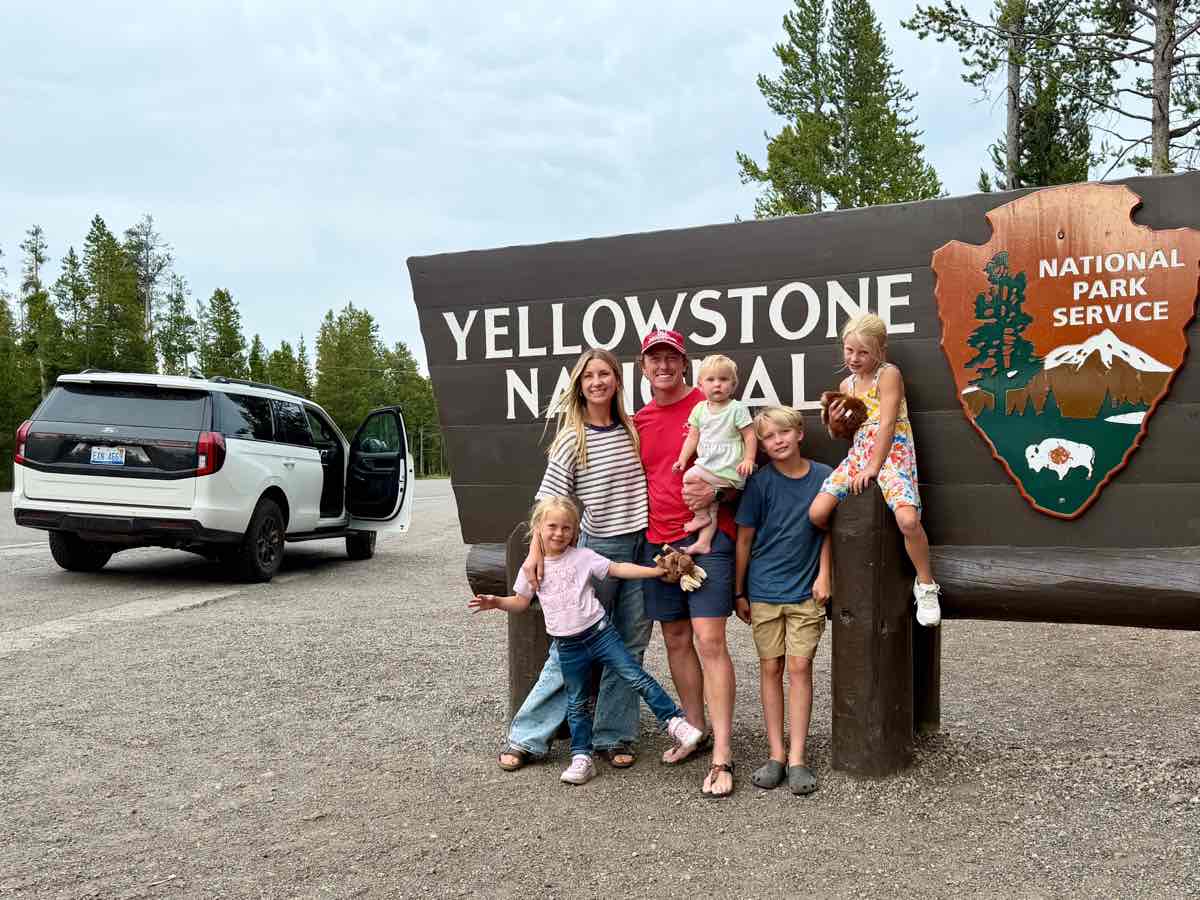
Then, 16 years after getting married, 10 years after becoming a parent for the first time and just one year after welcoming a fourth child, the family finally decided to make that dream happen.
Reality arrived quickly.
Driving With Four Kids Isn’t Exactly Peaceful
The romanticized version of a road trip usually involves endless highways, beautiful scenery and long conversations as the landscape changes outside the windows.
The reality with four children can be somewhat different.
There are arguments from the third row. There are constant requests. There are bathroom stops that somehow need to happen only minutes after the previous bathroom stop.
There is the enormous task of getting everybody into the vehicle, getting everybody out again, loading luggage, unloading luggage and keeping track of an entire family’s belongings along the way.
At times, simply reaching the destination can feel like an achievement.
That can make parents wonder whether the effort is actually worth it.
But then something changes.
Children See the Adventure, Not the Logistics
As the miles accumulated, Weber began seeing the trip differently.
Instead of focusing exclusively on the work required to keep the family moving, he started noticing how his children were experiencing the journey.
There was genuine excitement when a favorite snack appeared.
There was pointing through the windows as a long-awaited destination finally came into view.
There were quiet moments when the children simply watched America pass outside the vehicle.
Suddenly, the experience began to resemble Weber’s own childhood memories — except he was now seeing them from his parents’ perspective.
The exhausting logistical work that seemed so significant to the adults was barely registering with the kids.
For them, the adventure was happening.
Sometimes a Hotel Pool Is All It Takes
Adults tend to judge vacations through complicated calculations.
How much did the hotel cost? How far did we drive? Was the room worth the price? Could we have stayed somewhere cheaper? How much time did we lose stopping along the way?
Children have a much simpler evaluation system.
“They have a pool!”
That can be enough.
The inevitable excitement of arriving at a new hotel, discovering the pool and jumping onto unfamiliar beds can transform an otherwise ordinary overnight stop into a major event.
Those moments are a reminder that children don’t necessarily need every stage of a vacation to be spectacular.
Sometimes novelty itself is the adventure.
Then Come the Moments That Make Everything Worthwhile
Of course, the biggest rewards can arrive when the family finally reaches the places they traveled so far to see.
For Weber’s children, one of those moments came when they spotted their first bison in Yellowstone.
Yellowstone National Park is one of those places children may have previously encountered in books, photographs or videos. Seeing its wildlife and landscapes firsthand is an entirely different experience.
Another unforgettable moment came with a spontaneous swim during the family’s visit to Glacier National Park.
These aren’t necessarily complicated experiences.
That’s precisely the point.
The value isn’t found in creating a perfectly optimized itinerary. It’s found in watching children encounter something completely new.
A bison suddenly appearing in the landscape can become more important than hundreds of difficult highway miles.
A swim in a mountain lake can outweigh the frustration of packing the vehicle that morning.
Road Trips Show Kids How Big the World Really Is
Modern family life makes entertainment incredibly accessible.
Movies, games, videos and virtually unlimited information can travel with us everywhere.
A road trip offers something different.
It gives children a physical sense of distance and scale.
They watch cities disappear and mountains emerge. They see deserts, forests, lakes, rivers and small towns. They experience weather changing hundreds of miles from where the day began.
A destination isn’t simply somewhere that appears on a screen. They experience the distance required to reach it.
That can make the world simultaneously feel much bigger and much more accessible.
Yellowstone isn’t just a photograph anymore.
Glacier isn’t simply a name on a map.
They’re places the family actually traveled to together.
There Is No Such Thing as the Perfect Family Road Trip
Perhaps one of the biggest mistakes parents can make is expecting the journey to resemble the idealized road trip they imagined before leaving home.
There will probably be arguments.
Someone will almost certainly need a bathroom at the least convenient moment.
A child may become bored precisely when the scenery becomes spectacular.
Parents will become tired.
Plans will change.
Hotel rooms will occasionally disappoint.
And after a particularly difficult stretch of highway, someone in the front seat may quietly wonder whether flying would have been easier.
It probably would have been.
But easier isn’t necessarily the same thing as better.
The Car Becomes Part of the Family Story
That’s what makes road trips fundamentally different from simply traveling between two places.
When a family flies, the aircraft is usually just transportation.
On a road trip, the vehicle becomes part of the experience.
The car is where conversations happen, arguments erupt, snacks are shared and games are invented.
It’s where children sleep awkwardly against windows and siblings negotiate ownership of armrests.
It’s where everyone cheers when the destination finally appears on a road sign.
And years later, even the uncomfortable parts can become stories.
Remember when we drove all day?
Remember that weird hotel?
Remember when we stopped beside the lake?
Remember when we saw the bison?
Those memories accumulate mile by mile.
So, Are Road Trips With Kids Really Worth It?
During the hardest moments, the answer might genuinely feel like no.
Looking back, however, the equation changes.
Children grow incredibly quickly. The toddler strapped into a car seat eventually becomes the teenager wearing headphones in the third row. Before long, family schedules, school, college, jobs and adult lives make gathering everyone inside the same vehicle increasingly difficult.
That gives family road trips a limited window.
Perhaps that’s why they become such powerful markers of particular periods in our lives.
Parents remember who their children were during that summer.
Children remember being together.
And decades later, they may find themselves loading their own kids into an overpacked SUV before sunrise, handing out snacks and heading toward a national park hundreds of miles away.
Only then might they fully understand what their parents were doing all those years ago.
The trip wasn’t perfect.
It never needed to be.
The destination mattered, but so did everything that happened on the way there.
And ultimately, that’s probably why family road trips really are worth it.