


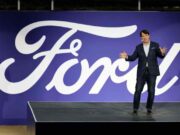




















Ford CEO Jim Farley has once again sounded the alarm over the rapid global expansion of China’s auto industry, arguing that Europe may already be too far down the road to reverse the trend. The United States, however, still has an opportunity to decide how Chinese automakers will be allowed to enter its market. Farley’s warning is particularly noteworthy because he is anything but dismissive of Chinese vehicles. He has openly praised their technology and even spent months driving a Xiaomi SU7, giving him firsthand experience with the competition Detroit could eventually face on American soil.
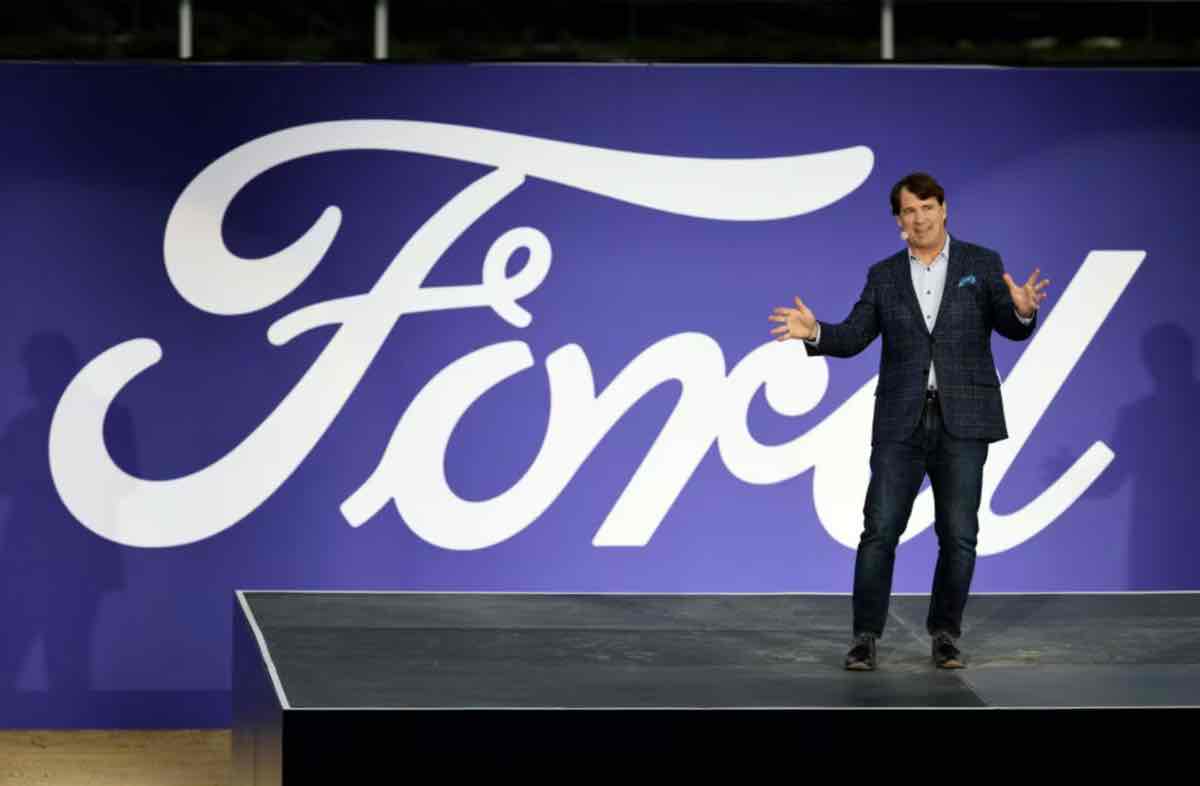
Jim Farley Is Taking China’s Auto Industry Very Seriously
Farley has repeatedly made it clear that Ford does not view Chinese automakers simply as low-cost competitors. China has developed an enormously capable automotive ecosystem, particularly around electric vehicles, batteries, software, power electronics, and manufacturing. In several of these areas, Chinese companies have not only caught up with established Western manufacturers but are increasingly setting the pace. That reality has turned China into one of the most important strategic challenges facing Ford and the broader U.S. auto industry.
Perhaps the best illustration of Farley’s attitude is the Xiaomi SU7. The Ford CEO famously spent months driving the Chinese electric sedan in the United States and spoke very positively about the experience. That is unusual for the head of one of America’s largest automakers, but it also makes sense from a competitive standpoint. Farley wants to understand exactly what Ford is up against, and driving one of China’s most talked-about EVs provides a much clearer picture than simply studying specifications or market reports.
Farley Says Europe May Have Reacted Too Late
Speaking at an Automotive News event on September 29, Farley again addressed the rapid international expansion of Chinese automakers. His argument was straightforward: the United States needs to carefully determine how Chinese companies will eventually participate in the American market, and it needs to make those decisions before the competitive landscape changes permanently.
Europe is the cautionary example. Chinese automotive groups have already established a meaningful presence across the European market, and their share continues to grow. During the first eight months of 2026, Chinese automakers reportedly accounted for approximately 9.6 percent of new-vehicle sales in the European Union, compared with roughly 6.2 percent during the same period a year earlier. Companies including BYD and Chery are expanding particularly quickly, while several other Chinese manufacturers are developing broader European sales, distribution, and manufacturing strategies.
What makes this shift especially significant is that Chinese vehicles are no longer competing primarily on price. Many now offer sophisticated EV powertrains, large batteries, fast charging, advanced infotainment systems, extensive connectivity, and increasingly polished interiors. The stereotype of a Chinese vehicle being an inexpensive but technologically inferior alternative is becoming increasingly outdated.
China’s Biggest Advantage Goes Far Beyond the Cars
One of the most difficult aspects of competing with China is the enormous industrial ecosystem behind its automakers. China has developed a deeply integrated EV supply chain encompassing battery cells, battery packs, electric motors, semiconductors, power electronics, software, and many of the raw materials and processing operations required to manufacture them.
That ecosystem can give Chinese manufacturers advantages in cost, scale, and development speed. A new vehicle program can draw on suppliers that are already producing EV components at enormous volumes, potentially allowing automakers to move from concept to mass production much faster than many traditional manufacturers.
This is one reason Farley has treated the issue as more than another round of international competition. Ford is not simply competing against individual models from BYD, Geely, Chery, Xiaomi, or SAIC. It is potentially competing against an automotive manufacturing ecosystem that has spent years building scale around the technologies expected to define the next generation of vehicles.
Ford Is Competing With China While Also Learning From It
There is an interesting twist to Ford’s position: the company is warning about Chinese competition while simultaneously working with Chinese companies. Those two strategies are not necessarily contradictory. Ford can use technologies developed in China where they provide a competitive advantage while still competing directly with Chinese automakers in the global vehicle market.
Battery technology is one of the clearest examples. Ford has worked with Chinese battery giant CATL as it seeks to reduce battery costs and expand access to lithium iron phosphate, or LFP, technology. Ford has also had dealings with Geely. For Farley, understanding and selectively using Chinese technology may therefore be part of making Ford more competitive against the very companies that helped develop it.
The approach highlights how interconnected the modern auto industry has become. Completely separating Western automakers from China’s automotive supply chain would be extremely difficult, particularly in the EV sector. At the same time, relying too heavily on Chinese technology could create strategic and political concerns of its own.
China Has Become an Automotive Export Powerhouse
The speed of China’s transformation becomes even clearer when looking at exports. China could export roughly 12 million vehicles globally in 2026, according to current estimates. In 2022, that figure was approximately 3 million vehicles. If the projection is realized, Chinese vehicle exports will have increased roughly fourfold in only a few years.
Europe is only part of that expansion. Chinese automakers are becoming increasingly prominent in Latin America, Southeast Asia, the Middle East, and numerous other markets. In many countries, consumers who might once have chosen a Japanese, Korean, European, or American vehicle are now being offered increasingly competitive alternatives from Chinese manufacturers.
The United States remains a major exception.
America’s Auto Market Is Still Largely Protected
Chinese-built vehicles face substantial trade and regulatory barriers in the United States. Tariffs and restrictions involving Chinese vehicle technology and software have made direct entry into the American market extremely difficult. As a result, U.S. consumers have largely been insulated from the wave of Chinese vehicles already appearing elsewhere around the world.
Farley’s concern is that this protection should not be mistaken for permanent immunity from competition. The larger question is what happens if Chinese manufacturers eventually establish production inside North America or find other ways to participate in the U.S. market.
President Donald Trump has previously indicated that Chinese automakers building factories in the United States, employing American workers, and manufacturing vehicles domestically could represent a different proposition from simply importing cars from China. In theory, such a model would resemble the strategy used for decades by Toyota, Honda, BMW, Mercedes-Benz, Hyundai, and other foreign manufacturers with major U.S. production operations.
Chinese ownership, however, would introduce additional political and regulatory questions involving government subsidies, connected-vehicle software, data security, supply chains, and control over strategically important technologies.
The Xiaomi SU7 Explains Why Farley Is Concerned
Farley’s enthusiasm for the Xiaomi SU7 may initially seem strange for the CEO of Ford, but it actually helps explain his concern better than almost anything else. Xiaomi was known globally for smartphones and consumer electronics before entering the automotive business, yet it managed to develop an electric sedan sophisticated enough to impress the person running one of America’s most historically important automakers.
That demonstrates how quickly the competitive landscape can change. Xiaomi is also only one company in a much larger industry. BYD has become a global EV powerhouse, Geely controls an extensive collection of automotive brands and technologies, Chery continues expanding internationally, and SAIC already operates on a massive scale.
For Ford, the question is therefore no longer whether Chinese automakers should be taken seriously. They clearly should. The question is whether Ford and other American manufacturers can develop vehicles that remain competitive in price, battery technology, software, manufacturing efficiency, and overall product execution.
Detroit’s Next Major Battle Has Already Started
The United States currently has something Europe does not: time and substantial barriers separating its domestic market from Chinese-built vehicles. Whether that remains the case indefinitely is much less certain. Chinese automakers continue expanding production capacity and international operations, and the sheer size of China’s automotive industry means global expansion is unlikely to stop at Europe.
Farley’s comments are especially significant because he is not arguing that Chinese cars are poor products that Americans should simply ignore. His message is effectively the opposite. Chinese automakers deserve attention precisely because their products, technology, manufacturing capabilities, and development speed have become so competitive.
For Detroit, that may be the most important lesson. Tariffs and regulations can change the competitive environment, but they cannot replace competitive products. If Chinese automakers eventually gain meaningful access to the American market, Ford, General Motors, Stellantis, Tesla, and other manufacturers may find themselves facing companies hardened by intense competition in the world’s largest automotive market.
The battle over the future of the auto industry is therefore no longer hypothetical. It is already underway across Europe, Asia, and other parts of the world. America may still have time to prepare, but Farley clearly does not believe that time should be wasted.