

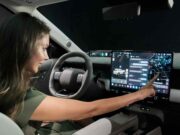













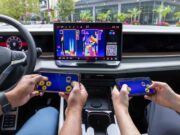














The all-new 2027 Hyundai Tucson will introduce much more than a dramatically redesigned exterior when it arrives in the United States. Hyundai’s popular compact SUV will become the first U.S.-market model equipped with Pleos Connect, the company’s next-generation infotainment platform built around Android Automotive OS, large high-resolution displays, over-the-air updates, an integrated app ecosystem and the new Gleo AI conversational assistant. In many ways, the new Tucson represents Hyundai’s first major step toward a future in which the vehicle continues to evolve long after it leaves the dealership.
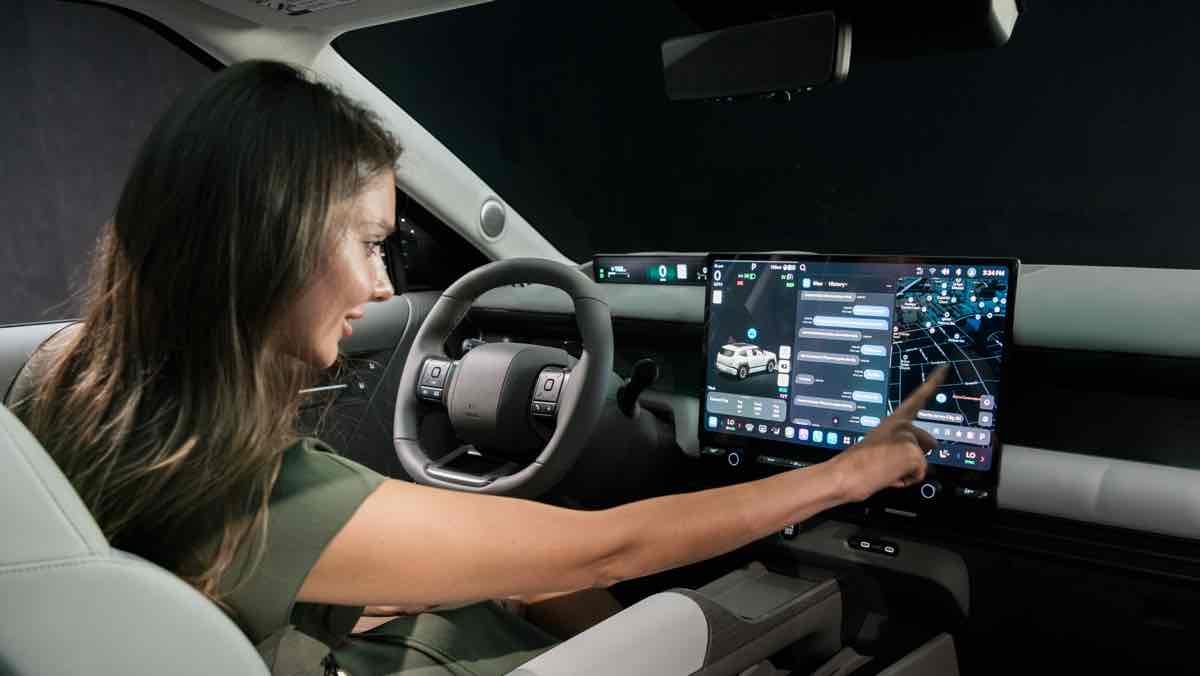
The 2027 Tucson Introduces Pleos Connect to America
Hyundai is preparing for one of its most significant infotainment transitions in years.
The completely redesigned 2027 Tucson will become the first Hyundai sold in the United States with Pleos Connect, a new infotainment architecture developed by 42dot, Hyundai Motor Group’s global software center.
Rather than simply replacing the graphics and menus of Hyundai’s existing infotainment systems, Pleos Connect represents a fundamentally different approach.
It is built around Android Automotive OS and designed as an expandable software platform capable of supporting native applications, connected services, artificial intelligence and continuous over-the-air improvements.
Hyundai describes three fundamental principles behind the system: intuitiveness, safety and openness.
The idea is straightforward. Instead of treating the software inside a new vehicle as essentially finished when the owner takes delivery, Hyundai wants the digital experience to continue developing throughout the vehicle’s life.
That makes the 2027 Tucson an especially important model for Hyundai.
It isn’t simply receiving a new infotainment screen. It is becoming the first major U.S. showcase for the company’s software-defined vehicle strategy.
Gleo AI Brings Conversational Artificial Intelligence Into the Tucson
Perhaps the most interesting element of Pleos Connect is Gleo AI.
Hyundai’s new in-vehicle artificial intelligence agent uses large language model technology to provide a significantly more natural form of voice interaction than conventional automotive voice-control systems.
Traditional vehicle assistants generally depend on specific phrases or predefined commands. Ask the same question using unexpected wording, and many systems struggle to understand what the driver actually wants.
Gleo AI is designed to operate differently.
The system can interpret natural-language requests, understand conversational and vehicle context, process multiple commands and use previous parts of a conversation to determine what the driver wants to accomplish.
In the United States, drivers will be able to activate the assistant by saying either “Hey Gleo” or “Hey Hyundai.”
Gleo AI can assist with navigation, information requests and compatible vehicle controls.
That could ultimately make voice interaction considerably more useful while driving. Instead of learning the precise terminology expected by the vehicle, occupants should be able to speak more naturally and allow the system to interpret their intent.
Hyundai also intends to improve Gleo AI through regular software updates, meaning the assistant’s capabilities can expand after customers purchase their vehicles.
Availability of individual Gleo AI features, however, may vary depending on Tucson model and trim level.
A Choice of Massive 17-Inch and 12.9-Inch Displays
Pleos Connect will be available in the Tucson with two center-display configurations.
Depending on specification, buyers will receive either a 12.9-inch or 17-inch center display.
Both offer a QHD resolution of 2560 x 1440 pixels and a familiar 16:9 aspect ratio.
The 17-inch version is particularly noteworthy. At that size, Hyundai is moving well beyond the conventional automotive touchscreen and closer to the dimensions associated with laptops and portable displays.
But Hyundai isn’t simply using the additional screen area to make buttons larger.
Pleos Connect supports both landscape and portrait-oriented layouts when individual applications support them. The system can display a single application across a conventional landscape interface or use a portrait-style arrangement for two-app multitasking.
Hyundai separates the experience into Driving View and App View.
Driving View prioritizes essential vehicle information and controls, while App View provides access to navigation, media and compatible native applications.
The approach should allow drivers to take advantage of the enormous available display area without constantly navigating through layers of menus.
A 9.9-Inch Slim Information Display Sits Directly Ahead of the Driver
Hyundai has also reconsidered the traditional digital instrument cluster.
Every 2027 Tucson equipped with Pleos Connect will feature a 9.9-inch Slim Information Display positioned above the steering wheel.
Its placement is designed to keep important information close to the driver’s natural line of sight.
The center section can display vehicle speed, posted speed limits, driver-assistance system information, media details, estimated arrival time, remaining trip distance and other driving data.
Additional information can appear along the sides, including estimated driving range, fuel level, efficiency, navigation directions and vehicle notifications.
The display can also provide feedback relating to functions such as the headlights and windshield wipers.
Combined with the enormous center touchscreen, the arrangement gives the new Tucson a very different digital architecture from the outgoing generation.
Hyundai Hasn’t Forgotten Physical Buttons
There is another important detail — and one that could prove particularly welcome to drivers frustrated by increasingly touchscreen-dependent interiors.
Hyundai is keeping physical controls for important vehicle functions.
Pleos Connect may represent a major move toward software-defined vehicles, but that doesn’t mean every interaction has to take place through a touchscreen.
Hyundai says physical buttons will remain available for key functions, providing quicker access to frequently used controls and helping drivers operate the vehicle without unnecessarily navigating through digital menus.
It is a sensible compromise.
The 2027 Tucson can deliver the visual flexibility and advanced capabilities of a modern software platform without completely abandoning tactile controls.
The Tucson Can Show a 3D Representation of Itself
Pleos Connect’s driving information area can incorporate a 3D model of the vehicle.
This isn’t purely decorative.
Depending on the vehicle and its equipment, the graphic can display status information and provide access to certain supported vehicle functions.
Those functions may include exterior-mirror operation, tailgate controls and front-trunk operation where applicable.
A dedicated Vehicle Settings application organizes additional compatible functions using on-screen controls.
The interface then provides visual confirmation and status messages after supported commands are executed.
It is another example of Hyundai attempting to make increasingly complex vehicle functions easier to understand visually.
Wireless Apple CarPlay and Android Auto Are Staying
Despite developing its own native application ecosystem, Hyundai isn’t forcing owners to abandon their smartphones.
Pleos Connect supports both wireless Apple CarPlay and wireless Android Auto.
That distinction is important.
As automakers increasingly develop proprietary connected platforms, some manufacturers have moved away from conventional smartphone projection. Hyundai is taking a different route.
Owners can continue using compatible applications and services through their phones while also having access to native applications running directly through Pleos Connect.
The Tucson therefore doesn’t require buyers to choose between Hyundai’s new ecosystem and the smartphone environment they already use.
Connectivity hardware is also suitably modern, with Bluetooth 5.4 and Wi-Fi 6 support.
Pleos App Market Turns the Tucson Into an Expandable Digital Platform
One of the biggest differences between Pleos Connect and a conventional infotainment system is the Pleos App Market.
This is Hyundai’s native application marketplace for vehicle-optimized software.
Instead of requiring applications to run on a connected smartphone and then projecting their interface onto the vehicle’s display, Pleos App Market applications can run directly through the Android Automotive OS-based infotainment platform.
Hyundai envisions applications spanning entertainment, productivity, mobility, lifestyle and vehicle-related services.
Streaming music and video-sharing services are among the types of applications expected within the ecosystem.
Individual apps can also receive updates independently from the vehicle’s larger multimedia software-update schedule.
That potentially allows developers to improve applications more frequently while giving Hyundai owners access to new functionality without waiting for an entire infotainment-system update.
Connected applications will require an appropriate vehicle data package.
Third-Party Developers Will Be Able to Build Apps for Hyundai Vehicles
The openness of the platform could eventually become one of Pleos Connect’s most important characteristics.
Hyundai is providing software development kits along with selected vehicle application programming interfaces to support third-party developers.
That opens the possibility of an expanding ecosystem of applications specifically optimized for Hyundai vehicles.
Applications will still need to pass cybersecurity and verification processes before being distributed through Pleos App Market.
If Hyundai can attract enough developers, Pleos Connect could eventually evolve in a similar way to smartphone operating systems, with the capabilities available to owners expanding as additional software reaches the platform.
Navigation Combines Online Information With Onboard Maps
Navigation has also received substantial attention.
Pleos Connect incorporates hybrid online navigation, combining connected mapping information with an onboard map database.
In the United States, current mapping information can be downloaded according to the vehicle’s location, while preinstalled map information helps maintain navigation functionality when an internet connection isn’t available.
That hybrid approach is important for a vehicle that may regularly travel through areas with inconsistent cellular coverage.
Navigation can operate in both portrait and landscape formats, while the flexible screen architecture can display mapping information alongside another compatible application.
Floating information cards can provide important route information without unnecessarily covering the map.
Search functionality incorporates Google Places data, potentially providing information such as photographs, operating hours and other available details for destinations and points of interest.
Gleo AI Makes Navigation More Conversational
Gleo AI and the navigation system are designed to work together.
Rather than requiring drivers to manually enter a precise address or work through a rigid series of voice commands, users can ask for destinations using natural conversation.
Because Gleo AI can interpret context, it can use information contained within a request to help identify an appropriate destination and begin route guidance.
This is where large-language-model-based vehicle assistants could become genuinely useful.
The most meaningful advancement isn’t necessarily answering trivia questions inside a car. It is reducing the amount of attention required to accomplish ordinary tasks while driving.
Finding a destination, adjusting compatible vehicle functions or requesting information through natural speech could significantly reduce the need to navigate menus manually.
Over-the-Air Updates Could Keep the Tucson Improving
Pleos Connect has been designed from the beginning to support over-the-air software updates.
That allows Hyundai to distribute compatible feature enhancements, performance improvements and software changes remotely.
The significance extends beyond simple map updates.
Software-defined vehicles increasingly allow manufacturers to change or improve substantial parts of the digital ownership experience after production.
That means a 2027 Tucson’s infotainment capabilities may not necessarily remain frozen at their original launch specification.
New applications can appear. Existing software can improve. Gleo AI can evolve. Features can potentially be refined as Hyundai gathers feedback from real-world customers.
For buyers who keep vehicles for many years, that could become an increasingly important part of ownership.
Pleos Connect System Specifications at a Glance
The initial U.S. specification for Pleos Connect in the 2027 Hyundai Tucson includes:
Operating system: Android Automotive OS
Developer: 42dot, Hyundai Motor Group’s global software center
Center display: 12.9-inch or 17-inch
Center display resolution: 2560 x 1440 QHD
Aspect ratio: 16:9
Driver display: 9.9-inch Slim Information Display
AI assistant: Gleo AI with large language model technology
Wake phrases: “Hey Gleo” and “Hey Hyundai”
Navigation: Embedded hybrid online navigation
Search integration: Google Places
Connectivity: Bluetooth 5.4 and Wi-Fi 6
Smartphone integration: Wireless Apple CarPlay and Android Auto
Native applications: Pleos App Market
Software updates: Over-the-air
Developer support: Software Development Kit and selected vehicle APIs
The 2027 Tucson Is Becoming Much More Than a Redesign
The timing of Pleos Connect’s introduction is significant because the Tucson isn’t a low-volume technology showcase.
It is one of Hyundai’s most important vehicles.
Choosing the redesigned Tucson to introduce Pleos Connect in the United States therefore demonstrates how seriously Hyundai is treating the transition toward software-defined vehicles.
The fifth-generation Tucson itself represents a substantial evolution, with a completely redesigned exterior, expanded interior technology, new electrified powertrain development and an available XRT Pro model aimed at customers looking for greater off-road capability.
But Pleos Connect could ultimately become one of the vehicle’s most consequential changes.
Large touchscreens have become commonplace. Smartphone connectivity is expected. Digital instrument panels are no longer unusual.
The real competition is increasingly moving toward software quality, artificial intelligence, updateability and the ability to add useful functionality throughout a vehicle’s lifespan.
Hyundai’s Software-Defined Future Starts With a Familiar SUV
Pleos Connect provides a revealing look at where Hyundai believes the automotive industry is heading.
Cars are increasingly becoming connected computing platforms, and manufacturers are competing not only over horsepower, fuel economy, interior space and driving dynamics, but also over operating systems and digital ecosystems.
Hyundai’s approach is particularly interesting because it combines an Android Automotive foundation with its own Pleos interface, Gleo AI, native application marketplace and developer ecosystem — while still retaining Apple CarPlay, Android Auto and physical controls.
That combination could prove important.
Rather than forcing customers into an entirely closed digital environment, Hyundai appears to be giving them multiple ways to interact with the vehicle.
The all-new 2027 Tucson will be the first opportunity for American Hyundai customers to experience that strategy.
And if Pleos Connect works as intended, the biggest change inside Hyundai’s new compact SUV may not be the enormous 17-inch screen itself.
It may be the idea that the technology behind that screen is never truly finished.