





























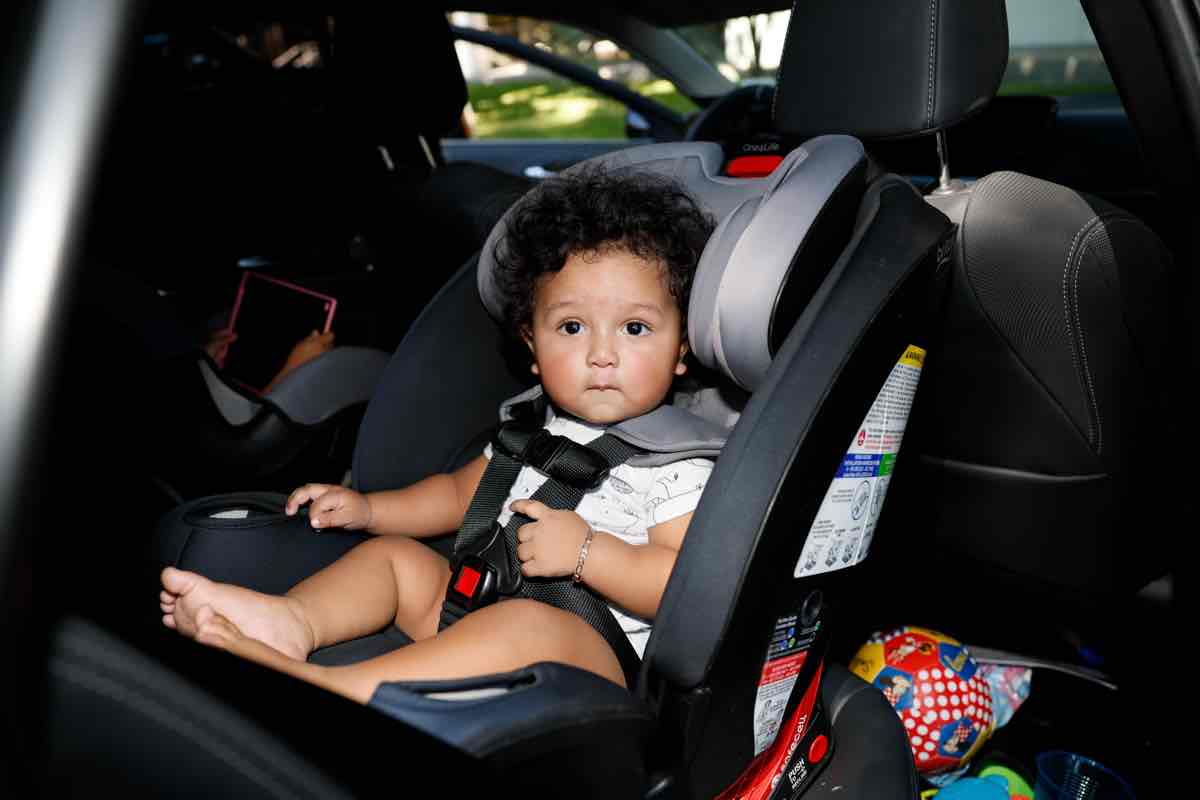
Hyundai Motor America is strengthening its commitment to child passenger safety through an expanded collaboration with UCI Health in Southern California. As part of its Hyundai Hope corporate social responsibility initiative, the automaker has donated $25,000 to support UCI Health’s Car Seat Safety Program, helping families access free child car seat inspections, professional installation guidance, safety education, and replacement seats when necessary. The initiative highlights an important reality of automotive safety: even the most advanced vehicle protection systems cannot fully compensate for an improperly installed child car seat.
Hyundai Takes Another Step Toward Safer Family Transportation
Automotive safety has evolved dramatically over the past several decades. Modern vehicles offer increasingly sophisticated crash structures, advanced airbag systems, automatic emergency braking, blind-spot monitoring, and numerous other technologies designed to protect occupants.
However, one of the most important aspects of child passenger safety remains surprisingly straightforward: ensuring that children are properly secured in correctly installed car seats.
Hyundai Motor America is addressing this issue through its continuing partnership with UCI Health, one of Southern California’s major academic healthcare systems.
On October 7, 2026, Hyundai announced a new $25,000 contribution through Hyundai Hope to support the Car Seat Safety Program operated by UCI Health’s Federally Qualified Health Centers (FQHCs).
The program focuses particularly on families facing financial or educational barriers to accessing appropriate child passenger safety equipment and professional assistance.
Rather than simply distributing car seats, the initiative combines practical demonstrations, personalized instruction, inspections, and replacement equipment to help parents and caregivers understand how to protect their children during everyday travel.
The collaboration is now in its second year, reflecting an ongoing effort to make child passenger safety education more accessible throughout Southern California.
Nearly Half of All Child Car Seats Are Installed Incorrectly
One of the most concerning aspects of child passenger safety is the frequency of improper car seat installation.
According to research cited by the National Highway Traffic Safety Administration (NHTSA), nearly half of all child car seats are installed incorrectly.
That statistic is particularly significant because the effectiveness of a child restraint system depends heavily on proper installation, correct harness adjustment, and compatibility with the child’s age, height, and weight.
A car seat may appear securely attached while still allowing excessive movement. Similarly, an incorrectly positioned harness or improperly adjusted restraint can compromise protection during a collision.
The potential consequences are substantial.
Research indicates that correctly used child car seats can reduce the risk of fatal injury by approximately 71% for infants and 54% for toddlers, compared with traveling without an appropriate restraint.
These figures demonstrate why child passenger safety education deserves attention alongside advances in automotive engineering.
Even a vehicle equipped with advanced active and passive safety systems cannot eliminate the risks associated with an incorrectly secured child.
For families, understanding the proper use of child restraints can be just as important as selecting a vehicle with strong crash-test performance.
Free Car Seat Inspections and Safety Education in Anaheim
To put the latest initiative into action, Hyundai and UCI Health organized a child passenger safety event on October 3, 2026, at the UCI Health Family Health Center in Anaheim, California.
The event brought together families, parents, expectant mothers, and certified Child Passenger Safety Technicians (CPSTs) for hands-on demonstrations and personalized guidance.
Participating caregivers received assistance with understanding how their child car seats should be installed and used.
The technicians also examined existing car seats to identify potential safety concerns.
These inspections included checking expiration dates, reviewing manufacturer recalls, evaluating proper fit, and assessing whether the restraints met current safety standards.
For families whose car seats were no longer suitable or safe, the program provided free replacements.
This aspect of the initiative is particularly important for households where purchasing a new child restraint may represent a significant financial burden.
By combining professional advice with access to replacement equipment, Hyundai and UCI Health are addressing both the educational and economic challenges associated with child passenger safety.
The goal is not simply to improve awareness but to help families leave with safer, properly installed equipment.
Certified Technicians Help Parents Understand Proper Installation
Installing a child car seat correctly can be more complicated than many drivers expect.
Modern vehicles typically provide LATCH (Lower Anchors and Tethers for Children) attachment systems, while many car seats can also be installed using the vehicle’s seat belt.
However, the correct installation method depends on the particular restraint, the vehicle’s seating configuration, and the manufacturer’s instructions.
Rear-facing seats, forward-facing seats, and booster seats all have different requirements.
Certified Child Passenger Safety Technicians help caregivers navigate these differences through practical instruction.
During the Anaheim event, families were shown how to install their seats correctly, secure their children, adjust harnesses, and recognize potential installation problems.
The personalized approach allows technicians to address specific concerns rather than relying exclusively on general written instructions.
It also gives parents an opportunity to ask questions about their own vehicles and child restraint systems.
For many caregivers, this kind of direct assistance can provide greater confidence when transporting young passengers.
Hyundai Hope Supports Families Beyond the Dealership
The contribution forms part of Hyundai Hope, Hyundai Motor America’s broader corporate social responsibility initiative.
While automakers traditionally emphasize vehicle design, manufacturing, and technological innovation, Hyundai Hope extends the company’s involvement into community health, education, and transportation safety.
The UCI Health collaboration illustrates how an automotive manufacturer can contribute to road safety beyond the vehicles it produces.
Rather than focusing exclusively on preventing collisions or improving crash protection, the program addresses how occupants use the safety equipment already available to them.
Cole Stutz, chief safety officer at Hyundai Motor North America, emphasized the importance of giving families access to reliable information and practical resources.
Through the collaboration, Hyundai aims to help parents and caregivers develop the knowledge and confidence needed to transport children safely.
The initiative also recognizes that effective safety education must be accessible to families regardless of their financial circumstances.
By supporting UCI Health’s established community healthcare network, Hyundai can help deliver assistance directly to populations that may otherwise struggle to access professional car seat inspections or replacement restraints.
UCI Health Brings Extensive Community Healthcare Experience
UCI Health serves approximately 5.6 million people across Orange County, western Riverside County, and southeastern Los Angeles County.
Its Federally Qualified Health Centers in Anaheim and Santa Ana provide healthcare services to underserved communities, including families with limited access to conventional medical resources.
These facilities offer comprehensive primary care for patients of different ages, from newborns and young children to adults and seniors.
Their services extend beyond traditional medical appointments, incorporating preventive care, educational programs, and community-based health initiatives.
The Car Seat Safety Program fits naturally into this approach.
Child passenger safety is not simply a transportation issue. It is also an important component of injury prevention and public health.
By helping families understand how to use child restraints correctly, healthcare professionals can address potential risks before an accident occurs.
Laurie Johnson, vice president of ambulatory care at UCI Health, highlighted the organization’s commitment to making car seat safety education available to families from different backgrounds and income levels.
She also emphasized the importance of hands-on demonstrations, particularly when teaching caregivers how to install restraints and secure children properly.
The Hyundai partnership provides additional financial support for this preventive approach.
The Collaboration Builds on Earlier Hyundai Support
The latest $25,000 contribution is not Hyundai’s first investment in UCI Health’s community programs.
The two organizations have previously worked together on initiatives designed to improve healthcare access and support underserved populations in Southern California.
Earlier Hyundai contributions helped expand diabetes-related services at UCI Health Family Health Centers in Anaheim and Santa Ana.
Those efforts supported access to specialized care and educational resources for patients who might otherwise face barriers to receiving appropriate treatment.
The child passenger safety collaboration builds on that established relationship.
In 2025, Hyundai and UCI Health also partnered on child passenger safety efforts, establishing the foundation for the program’s second year.
The October 2026 initiative continues that work while reinforcing the importance of sustained community engagement.
For families benefiting from these services, the practical results may be more meaningful than the financial contribution alone.
A correctly installed child car seat, an identified safety recall, or a replacement restraint can make a tangible difference during everyday transportation.
Why Proper Car Seat Use Matters Even in Modern Vehicles
The automotive industry has made substantial progress in occupant protection.
Today’s family vehicles are engineered around increasingly demanding crash-test standards and often include a wide range of electronic safety technologies.
Nevertheless, child passengers require specialized protection because their bodies respond differently to collision forces than those of adults.
An adult seat belt is designed primarily around adult body proportions. Young children generally need dedicated restraint systems to position and distribute crash forces appropriately.
Rear-facing child seats provide additional support for the head, neck, and spine of infants and younger children.
As children grow, forward-facing restraints with harnesses and later booster seats help maintain appropriate positioning until the vehicle’s seat belt fits correctly.
The transition between these stages should be determined by the child’s size and the applicable restraint limits, rather than age alone.
A child restraint must also be compatible with the vehicle in which it is installed.
This is why professional inspections remain valuable even for experienced parents.
A family purchasing a new SUV, replacing an older vehicle, or switching to a different car seat may encounter installation requirements that differ from their previous setup.
The Hyundai and UCI Health program addresses these everyday challenges through individualized guidance.
Five Essential Child Passenger Safety Practices Every Parent Should Know
Although professional inspections offer the most personalized assistance, several fundamental practices can help families reduce common child restraint mistakes.
1. Select the correct restraint for the child. Car seats should be appropriate for the child’s height, weight, and developmental stage, while remaining within the manufacturer’s stated limits.
2. Keep children rear-facing as long as permitted. Children should remain in rear-facing restraints until they reach the maximum height or weight allowed by the seat manufacturer, following applicable state requirements.
3. Follow both instruction manuals. The vehicle owner’s manual and the child car seat manual provide essential information about approved installation methods, seating positions, and attachment systems.
4. Check harness positioning and installation security. The harness should fit snugly, and the installed seat should not move more than approximately one inch from side to side or front to back when tested at the belt path.
5. Inspect the seat’s condition and history. Parents should check for recalls, expiration information, missing components, and any crash history that may require replacement under the manufacturer’s instructions.
These principles are especially relevant when families change vehicles, purchase secondhand child restraints, or transition between different types of car seats.
When uncertainty remains, a certified Child Passenger Safety Technician can provide assistance tailored to the specific child, seat, and vehicle.
Making Child Passenger Safety More Accessible Across Southern California
One of the most significant elements of Hyundai’s contribution is its focus on accessibility.
Families with limited financial resources may face challenges obtaining appropriate child restraints, particularly when a child outgrows an existing seat or when an older restraint must be replaced.
Professional installation guidance can also be difficult to access without dedicated community programs.
By working with UCI Health’s Federally Qualified Health Centers, Hyundai is helping connect these services with families who may benefit most.
The $25,000 donation supports education, inspections, outreach, and access to safety resources through the existing healthcare network.
The Anaheim event demonstrates how this model can work in practice.
Families receive direct assistance from qualified professionals, learn how to identify common safety issues, and can obtain replacement equipment when necessary.
The approach combines education with immediate practical support.
It also reinforces the value of collaboration between healthcare providers and automotive manufacturers, particularly when both organizations share an interest in preventing transportation-related injuries.
A Different Perspective on Automotive Safety
Automotive safety discussions frequently focus on crash-test ratings, driver-assistance technologies, and new engineering innovations.
These developments are important, but they represent only part of the broader safety picture.
Child passenger protection also depends on everyday decisions made by parents and caregivers.
Correct installation, appropriate restraint selection, and regular equipment checks can significantly influence how effectively a child is protected during a collision.
Hyundai’s continued collaboration with UCI Health demonstrates that meaningful automotive safety initiatives do not always require introducing a new vehicle technology.
Sometimes, the most practical improvements come from helping people use existing safety equipment correctly.
With its latest $25,000 contribution, Hyundai is supporting a community-based program that brings professional guidance and essential resources directly to Southern California families.
The initiative also underscores an important responsibility shared by automakers, healthcare professionals, and caregivers: ensuring that every child has the opportunity to travel as safely as possible.
As vehicle safety technology continues to evolve, programs such as the UCI Health Car Seat Safety Program remain an essential complement to the engineering advances built into modern cars.
For Hyundai, the message is clear: protecting passengers extends beyond the vehicle itself, and helping families understand child restraint safety is another meaningful way to make America’s roads safer.